Quick Answer: Phlebotomy job settings differ most in pace, pressure, and skill development. Hospitals are usually faster-paced with higher demands and broader skill exposure, while clinics are more structured and predictable, which can make them a strong starting point for building consistency.
This is where many new phlebotomists get stuck. Training teaches you how to draw blood, but it does not always prepare you for how different the work can feel depending on where you are hired. A hospital shift and a clinic shift can feel like two very different job experiences.
At Dumonde Training Center, this question comes up regularly. Students complete training, start applying, and then realize they are unsure which environment fits their lifestyle, confidence level, or long-term goals. Choosing without understanding the differences can lead to frustration, burnout, or slower skill development.
What Are Phlebotomy Job Settings?
Phlebotomy job settings are the environments where blood collection and specimen handling take place. The setting shapes your schedule, pace of work, and the type of patients you see each day.
This decision affects more than comfort. It can influence how quickly you build confidence, how your skills develop, and what kind of experience you gain early in your career.
- Hospitals: Inpatient care with higher volume and greater urgency
- Clinics: Outpatient care with scheduled appointments
- Laboratories: Controlled collection and processing environments
- Mobile phlebotomy: Travel-based patient care
- Long-term care: Routine draws for ongoing monitoring
If you are unsure how these settings translate into daily work, reviewing what working as a phlebotomist looks like each day can help connect training to real job expectations.
Common Work Environments for Phlebotomists
- Hospitals: Inpatient units with continuous demand
- Clinics: Scheduled outpatient visits with a steady flow
- Diagnostic labs: Accuracy-focused, controlled environments
- Mobile services: Home visits with flexible routing
- Long-term care: Ongoing monitoring for elderly patients and residents with chronic conditions
Hospital Phlebotomy Jobs: What to Expect
Daily Responsibilities
Hospital phlebotomists often move between departments performing bedside draws. Shifts may begin early with morning rounds, followed by ongoing requests from areas such as the ER, ICU, and inpatient units.
This environment can be demanding. Time-sensitive draws, difficult veins, and constant movement are often part of the workflow. It can accelerate skill development, but it also requires steady technique and good composure under pressure.
Work Environment and Pace
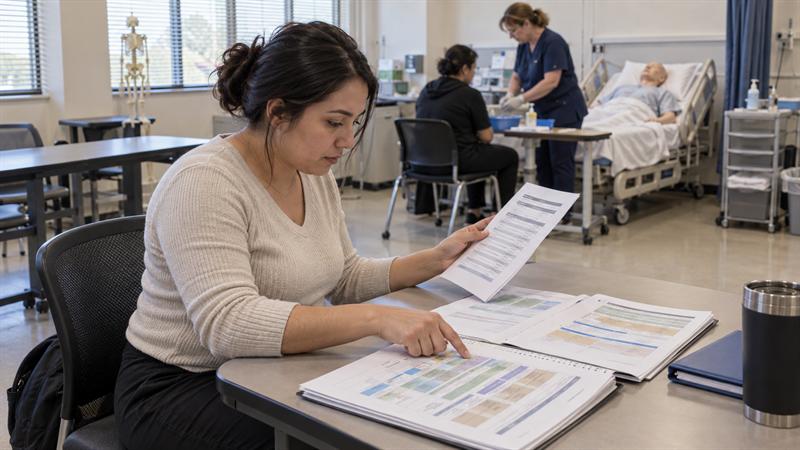
Hospitals are fast, unpredictable, and volume-driven. Priorities can shift throughout the day, and you may rarely see the same patient twice.
Many new phlebotomists underestimate how demanding this setting feels in real time. When foundational skills are not yet solid, performance and confidence can both suffer under pressure.
Pros and Challenges
- Pros: Broader clinical exposure, faster skill development, and strong long-term growth potential
- Challenges: Irregular hours, higher stress, and a physically demanding workload
This setting tends to reward adaptability, consistency, and strong fundamentals.
Clinic Phlebotomy Jobs: What to Expect
Daily Responsibilities
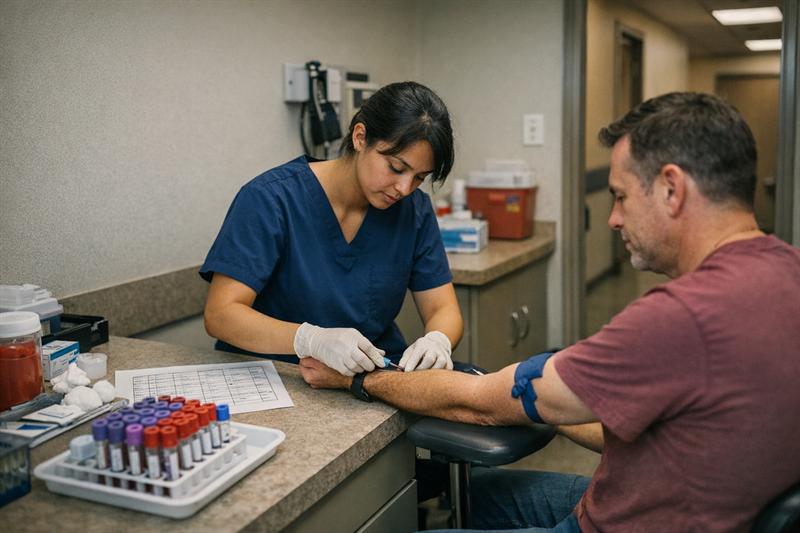
Clinic phlebotomists usually work with scheduled patients and routine draws. The workflow is more controlled, and you are more likely to see repeat patients.
This structure can help build confidence through repetition. Many entry-level phlebotomists start here because it allows them to strengthen technique in a more predictable environment.
Work Environment and Pace
Clinics often follow predictable schedules with a steady patient flow. There is usually less urgency than in hospitals, and tasks tend to be more consistent from day to day.
This slower pace can help build stability, though it may offer fewer opportunities to handle complex situations early on. For some phlebotomists, that means growth comes more gradually unless they later move into a higher-volume setting.
Pros and Challenges
- Pros: Consistent hours, lower pressure, and stronger patient interaction
- Challenges: Less variety and slower exposure to more advanced procedures
For many beginners, the clinic setting provides a practical place to build consistency before taking on a faster-paced role.
Other Phlebotomy Work Settings to Consider
Diagnostic Laboratories
Lab settings focus on specimen collection and processing, often with less emphasis on extended patient interaction. Accuracy, labeling, and consistency are key priorities.
Mobile Phlebotomy
Mobile phlebotomy involves traveling to patients and managing your own schedule. It offers flexibility but also requires independence and strong time management. For a closer look, see how to start a career in mobile phlebotomy work.
Long-Term Care and Assisted Living
This setting often involves routine monitoring for elderly patients and residents. It requires patience, clear communication, and a steady approach to repeated draws.
Key Differences: Hospital vs Clinic Phlebotomy
Schedule and Hours
Hospitals often operate on rotating shifts, including nights and weekends. Clinics typically follow standard daytime schedules. This directly affects your routine and work-life balance.
Patient Interaction
Hospital interactions are often brief and task-focused. Clinics may allow for more consistent patient relationships, which changes how communication is used from one setting to the next.
Skill Development
Hospitals can speed up technical growth through volume and complexity. Clinics reinforce consistency and accuracy through repetition.
Workload and Stress Levels
Hospital workloads are often more time-sensitive and demanding. Clinic workloads are usually steadier and easier to anticipate. This difference can affect how quickly fatigue builds and how comfortably a new phlebotomist adjusts.
If you are already thinking about where you might struggle, pay attention to these signs:
- You feel unsure performing blood draws under time pressure
- You prefer structured schedules over unpredictable shifts
- You need repetition to build confidence before handling difficult draws
- You are not yet comfortable managing multiple patients quickly
If several of these apply, starting in a clinic setting may be the more practical choice before moving into hospital work.
How to Choose the Right Phlebotomy Job Setting
Based on Personality
If you prefer fast-paced environments and constant movement, hospital work may be a better fit. If you prefer structure and predictability, clinics can offer a more stable starting point.
Based on Career Goals
If your goal is broader clinical exposure or a faster-paced learning environment, hospital experience can help build momentum. Clinics can support entry into the field while helping you strengthen consistency and patient interaction.
Based on Experience Level
Many beginners benefit from starting in clinics to build confidence and consistency. Moving into hospitals later is a common path once core skills are stronger.
This progression depends partly on training quality. Weak fundamentals become more noticeable in high-pressure environments. Reviewing common blood draw errors new phlebotomy students can avoid can help reduce mistakes that affect early job performance.
How Training Prepares You for Different Work Environments
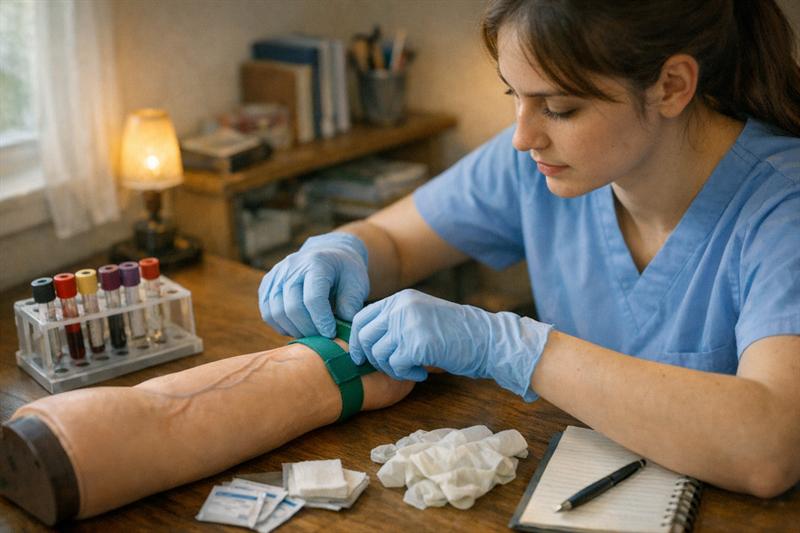
Training builds core skills such as venipuncture, infection control, and patient communication. The difference is how those skills are applied in each setting.
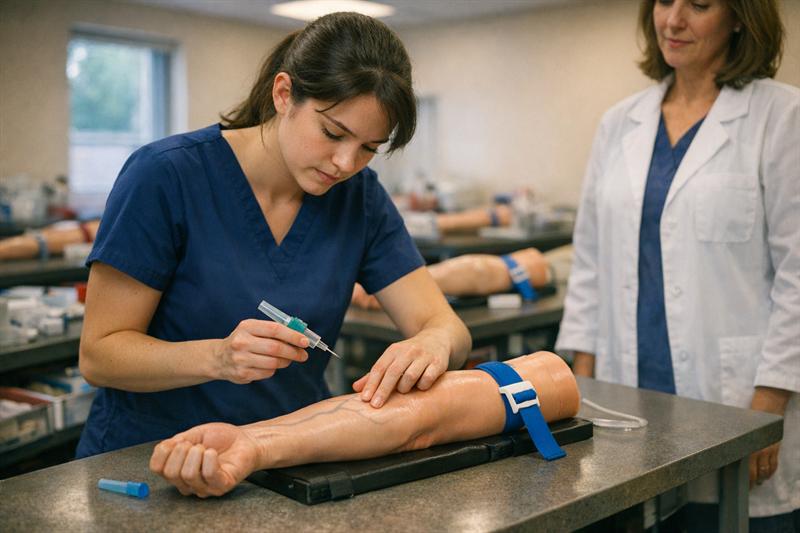
In hospitals, skills are often used under more pressure and at a faster pace. In clinics, they are used with more repetition and routine. Without enough hands-on practice, either environment can feel harder to manage.
Understanding phlebotomy training requirements in Georgia can help clarify what preparation is expected before entering the workforce.
Conclusion
The real issue is not simply choosing between hospital and clinic. It is choosing without understanding how each environment actually works.
When this decision is made without enough clarity, it can lead to stress, poor fit, and an unnecessarily difficult start. Hospital roles can overwhelm someone who is still building strong fundamentals. Clinic roles may feel too limited for someone ready for a faster pace and broader exposure.
Dumonde Training Center focuses on preparing students for both paths by building real-world readiness. Training includes hands-on practice, workflow awareness, and exposure to the expectations of different job settings.
If you want to avoid starting in the wrong environment, the next step is straightforward: get trained in a way that prepares you for actual job conditions, not just certification.
Key Takeaways
- Hospital settings are faster-paced and can build skills quickly
- Clinic settings are more structured and can help build confidence
- Each environment calls for a different level of readiness
- Starting in the wrong setting can lead to frustration or slower progress
- Training affects how flexible your career path becomes
How Dumonde Training Center Prepares You
Dumonde Training Center prepares students for real job conditions, not just exams. Training includes hands-on venipuncture, realistic workflows, and guidance on moving between different healthcare environments.
This approach helps students avoid common early mistakes and build the confidence needed to work in both clinic and hospital settings.
FAQ
Where do most phlebotomists work?
Phlebotomists commonly work in hospitals, clinics, and laboratories. These settings offer steady demand because blood collection is part of routine testing and patient care.
Is hospital phlebotomy more stressful than clinic work?
Hospital work is often more fast-paced and demanding. Urgent draws, inpatient rounds, and higher patient volume can increase pressure compared with many clinic roles.
Which setting is better for beginner phlebotomists?
Clinics are a common starting point for beginners. The structured workflow and repetition can help build confidence before transitioning into a hospital setting.
Can you switch between phlebotomy job settings later?
Yes, switching between settings is common. Core phlebotomy skills transfer across environments, although stronger fundamentals usually make the transition smoother.
Do phlebotomists earn more in hospitals or clinics?
Hospitals may offer higher pay in some cases, especially when shifts include nights, weekends, or higher-demand schedules. Over time, experience, location, and employer often play a major role as well.
What is the easiest phlebotomy job setting to start in?
Clinics are often one of the easier places to start because the pace is more predictable. That can make it easier for new phlebotomists to build consistency before moving into more demanding roles.