The chart is the part of the shift that survives. Long after the aide has gone home and the resident has moved to a different room, the note is what a surveyor, a physician, a family member or an attorney reads to understand what happened. That is the standard any documentation effort has to reach, and it is a higher bar than most in-service calendars set.
Searches that read “documentation training nursing home assisted living” usually come from an administrator weighing a facility-wide program rather than a single course for one nurse. The question behind that search is practical: what the sessions should cover, how they should run, and how anyone would know afterward whether the notes got better. DuMonde Management & Consulting works through that question with senior living communities, rehabilitation centers, home care agencies, home health agencies and hospice providers across the Atlanta metro, and documentation training is one of the services it offers those providers.
Why Documentation Problems Survive in Careful Facilities
Most facilities fold documentation into orientation. A new aide sits through a policy review in the first week, signs an acknowledgment, and then learns the real standard from whoever is working the hall. That second curriculum is the one that sticks, and nobody wrote it down.
The habits it produces are predictable. Notes get written at the end of a long shift, from memory, in a batch. Handoff happens out loud at the desk while the written record catches up later. A late entry describes what the aide remembers rather than what the aide saw at the moment it happened. None of that is neglect. It is what a busy shift does to a task that feels administrative until someone reads it closely.
A facility can pass its last survey and still carry those habits. Surveys sample. A different surveyor reads a different set of charts in a different week, and the note that explained nothing in March is still the note that explains nothing in September. Training built around the note itself, repeated on a schedule, is the part that changes this.
Core Topics to Cover in Documentation Training for Care Facilities
Documentation training for care facilities has to start with the note itself, not with the software that stores it. Staff who can explain what a complete note contains tend to write one, and a system upgrade teaches none of that. The service covers documentation best practices, legal requirements, and methods to improve efficiency in record keeping, and the topics below carry most of the weight in a direct-care setting.
- What a complete note contains: the event, the time, the resident’s condition, and what changed since the previous entry.
- Objective description instead of opinion: “ate most of the tray” holds up, while “ate well” leaves the next reader guessing.
- Timing and late entries: write the note when the care happens, and when that is impossible, say when the note was actually written.
- Care notes versus the care plan: a note records an event, a plan records the approach, and blending the two leaves both unclear.
- Orders, specimens and results: how a draw, a specimen or a new order connects back to the documentation that authorized it.
- Correction without alteration: the single line, the initials, the date, and never a clean page that hides what the original said.
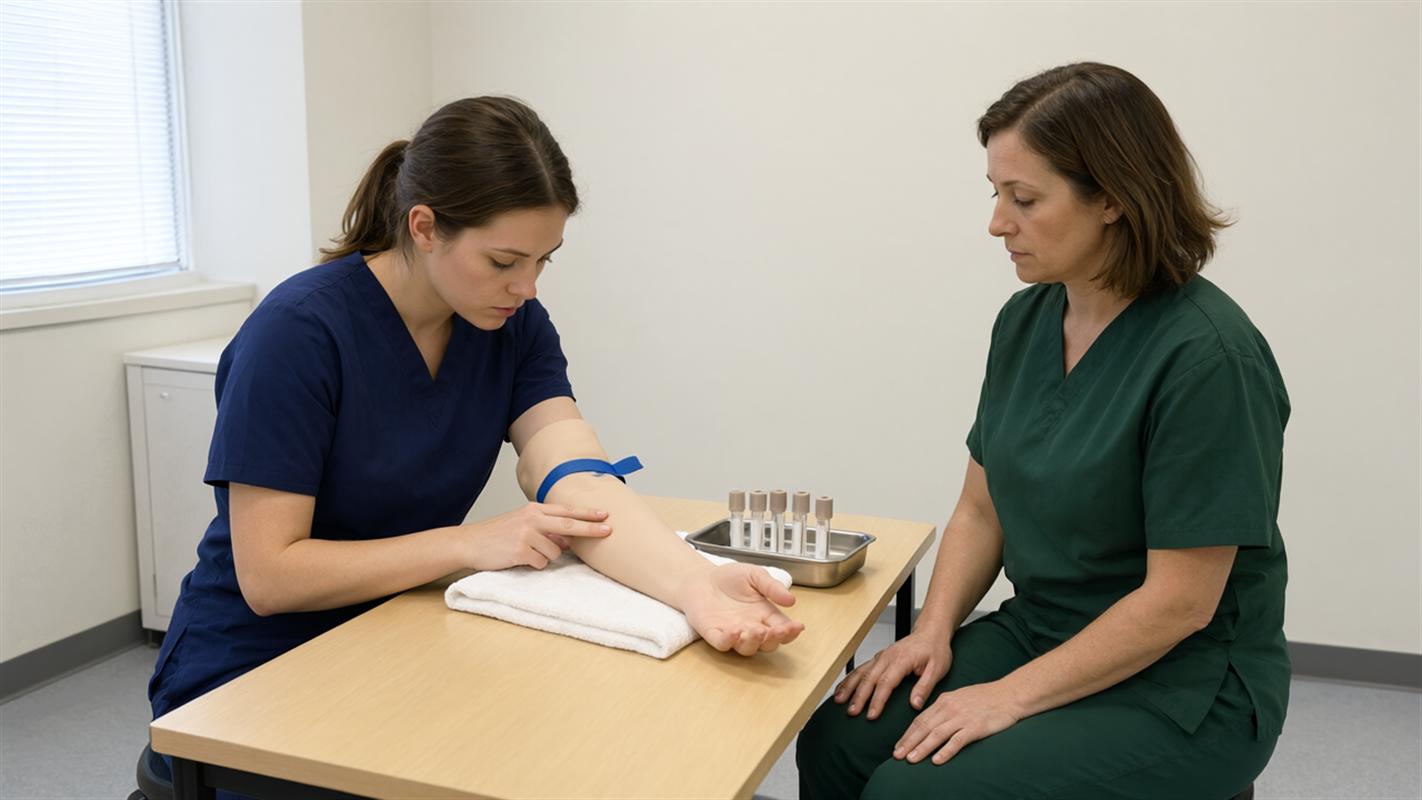
The task-level version of these six topics is worth reading before the session. What to chart during a blood draw walks through the details a single specimen record needs, and it makes the abstract standard concrete for staff who collect samples.
Care Documentation Best Practices That Hold Up Under Review
Care documentation best practices that hold up under review share one trait: a reader who was not there can follow what happened. That means the events appear in the order they occurred, in plain words, with enough context for someone reading the chart months later.
Name what was observed, not what was assumed. When a resident declines a medication or a meal, the note carries the resident’s own words and the action taken in response. Sign and time each entry, including the entries written after the fact. Keep the language simple enough that a family member can follow it without a glossary, because that reader is often the one who matters most.
The same principle governs the written standard sitting behind the notes. Policy and procedure templates for specimen collection show how specific a procedure has to be before two staff members can follow it the same way twice, and the same test applies to any charting standard a facility adopts.
How to Structure a Documentation In-Service Session
An hour is enough, if the hour has a shape. Small groups work better than a full-staff meeting, because everyone needs to write. Start with two de-identified notes from the facility’s own records, one that holds up and one that does not. Ask the group what the second note leaves out, and let them find the gaps before the standard is presented.
Then teach the standard for that one note type and have each person write a note from a short scenario. Read three aloud, including one weak one, and ask the group to name what is missing. Close by having every participant state one change for the next shift. Keep to a single note type per session and rotate it monthly through the year.
In-service topics can also extend to emergency procedures, infection control and patient care techniques, with the mix tailored to what the facility needs. That flexibility matters when one required in-service hour has to reinforce a documentation habit at the same time.
Building a Documentation Culture Between Sessions
A session changes what staff know. The shift changes what staff do. Consultants work with the facility’s own team to establish reliable documentation processes and stay involved after the training ends, which is usually where the gap appears.
Four small routines hold the gain. Keep a one-page reference at the nurses’ station, written by the staff who use it. Have the charge nurse read one note before the shift closes, chosen at random rather than as a spot check on a suspect. Assign new hires to shadow a strong documenter during week one, before their own habits set. Handle every correction as a teaching conversation about the missing detail, not as a write-up.
Name one documentation lead per shift. A named person answers questions in the moment, and questions answered in the moment are the ones that do not become late entries.
How to Tell Whether the Training Changed Anything
Pull a small sample of charts per unit each month and score the same items every time: completeness, objective language, timing, signature, connection to the order, and correction method. Compare the same items across months rather than scoring a fresh list each cycle, or the numbers describe the reviewer more than the notes.
Read the notes written on nights and weekends, not the ones prepared for a review. Those are where the real habits sit. Ask two or three staff members to explain a note they wrote and what happened around it, which shows whether the standard is understood or only imitated.
In senior living and rehab settings, the lab side of that standard shows up first, because a mislabeled specimen costs a resident a second draw; the practical version sits in lab error reduction in senior living and rehab.
Key Takeaways
- Documentation is learned on the hall, not in orientation, unless a facility teaches it deliberately and repeats it.
- A complete note lets a reader who was not present follow what happened, in the order it happened.
- One note type per session, with staff writing and reading their own work aloud, teaches more than a policy review.
- Four routines between sessions, plus one named lead per shift, keep the standard from fading.
- A monthly chart review against the same scoring items is how a facility sees whether anything changed.
Where to Start
Documentation training sits on a longer consulting list that includes policy and procedure development, facility and provider audits with a full plan of correction, care plan development, and state-required in-services for care providers. Those pieces tend to move together: a session sets the standard, an audit shows where it slipped, and a revised policy keeps it in place. The same organization also runs a training center in Roswell that prepares certified nursing assistants, certified medication aides, phlebotomists, and CPR and first aid students, so the instructors spend their working days on the skills that produce the notes.
Start with one unit, one note type and one month of chart review. The full consulting service list sets out each service and what it covers, and a conversation about the current chart sample is usually enough to decide whether a facility-wide program is the right next step.