You have decided on healthcare and narrowed it to two roles that both put you next to patients and both train in weeks rather than years. A patient care technician covers a wide set of support tasks across a shift. A phlebotomist performs one technical procedure, over and over, with strict steps around it. DuMonde Training Center trains allied health students in Roswell, Georgia, for work across the Atlanta metro, and its course list covers six roles, including patient care technician and phlebotomy technician. This comparison sticks to what actually separates the two: the shape of a shift, the training behind each title, and the order you can take them in.
PCT vs Phlebotomy: The Short Answer
A patient care technician works under the direction of nurses and other licensed staff. The task list comes from the employer rather than from one national job description, so two technicians in two buildings can spend the same shift quite differently. The work is broad by design: vital signs and monitoring, help with daily activities, specimen collection, basic laboratory work, and charting, mixed according to the setting.
A phlebotomist goes the other way. The job centers on blood collection by venipuncture and capillary puncture, plus the labeling and handling that keep a sample usable on its way to the lab. The skill is narrower, and the repetition is the point.
Neither title is the senior version of the other. Searching PCT vs phlebotomy usually returns two task lists that read alike, because the difference is not the list. It is how much of the day repeats and how much of it changes.
What a Patient Care Technician Does All Day
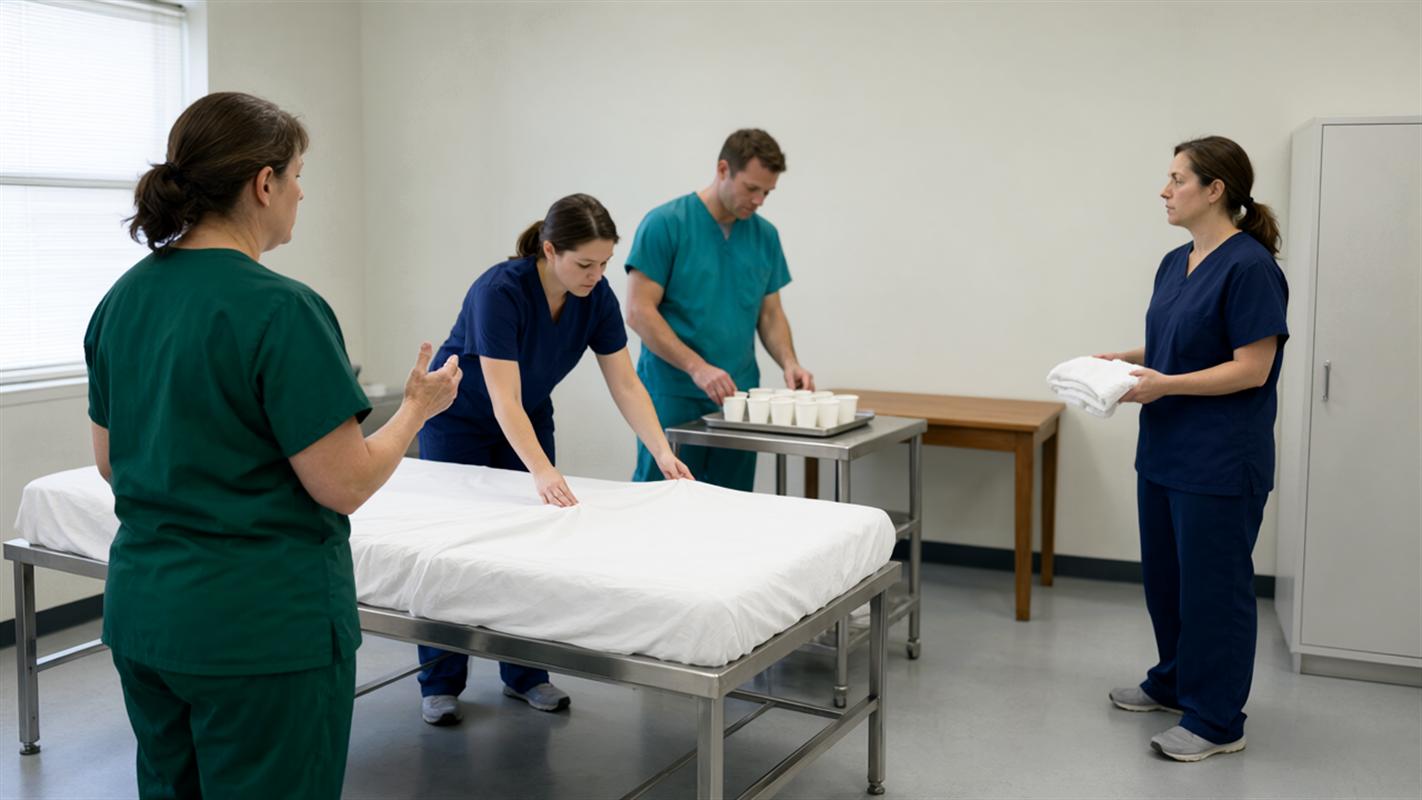
Expect a shift built from many small jobs rather than one long procedure. Vital signs and patient monitoring run through the day, because a technician is often the person who notices a change first and passes it to the nurse. Add help with daily activities, a specimen to collect, a lab errand to run, and the charting that records all of it.
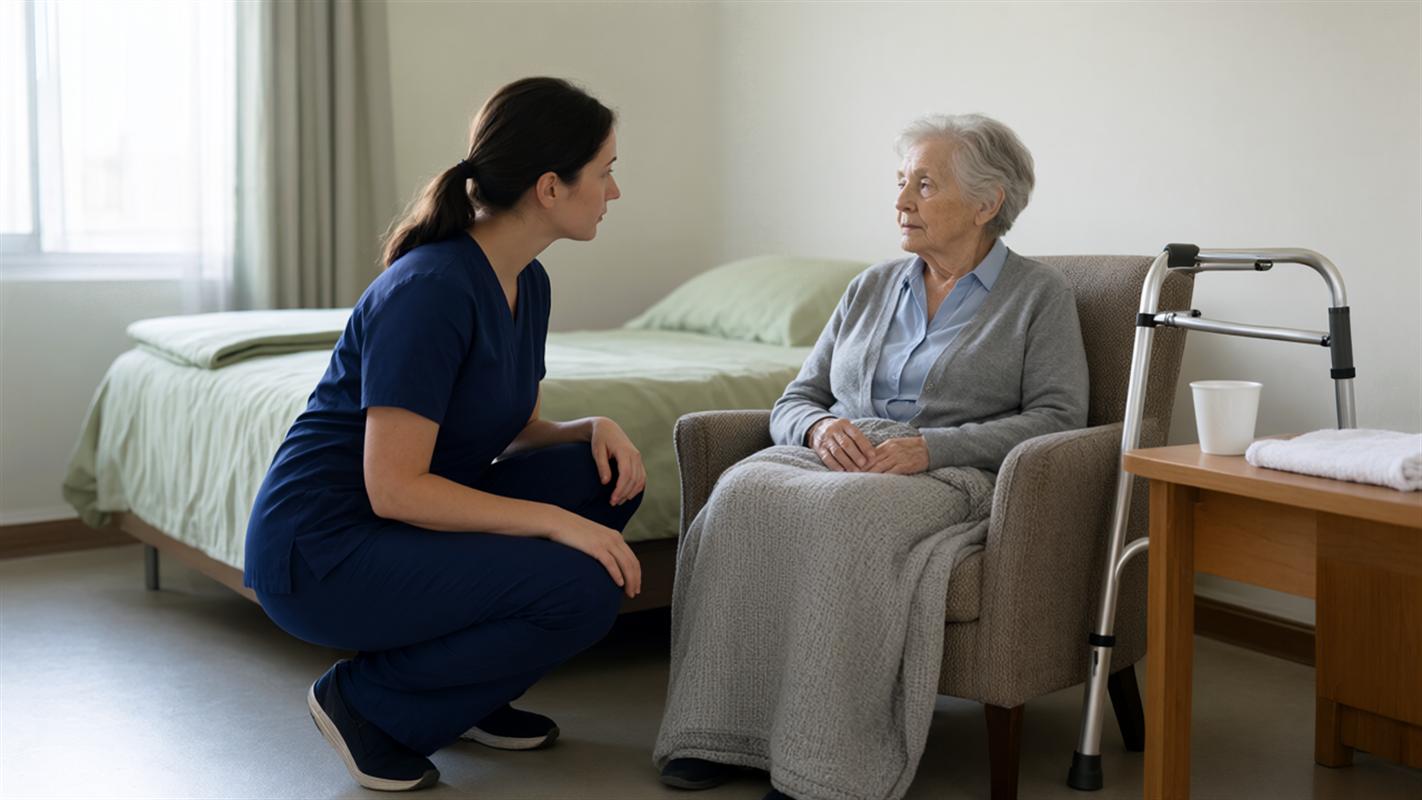
Where you work changes the mix. Hospitals and acute care lean on monitoring and turnover. Long-term care and rehabilitation lean on routine and continuity, with the same residents on your list each week. Dialysis centers run on a tight, repeated sequence. Clinics and home care spread the work across fewer people, with more conversation in it.
If the variety is what appeals to you, patient care technician training in Georgia is where the observation, communication, documentation, and hands-on skills get built.
What a Phlebotomist Does All Day
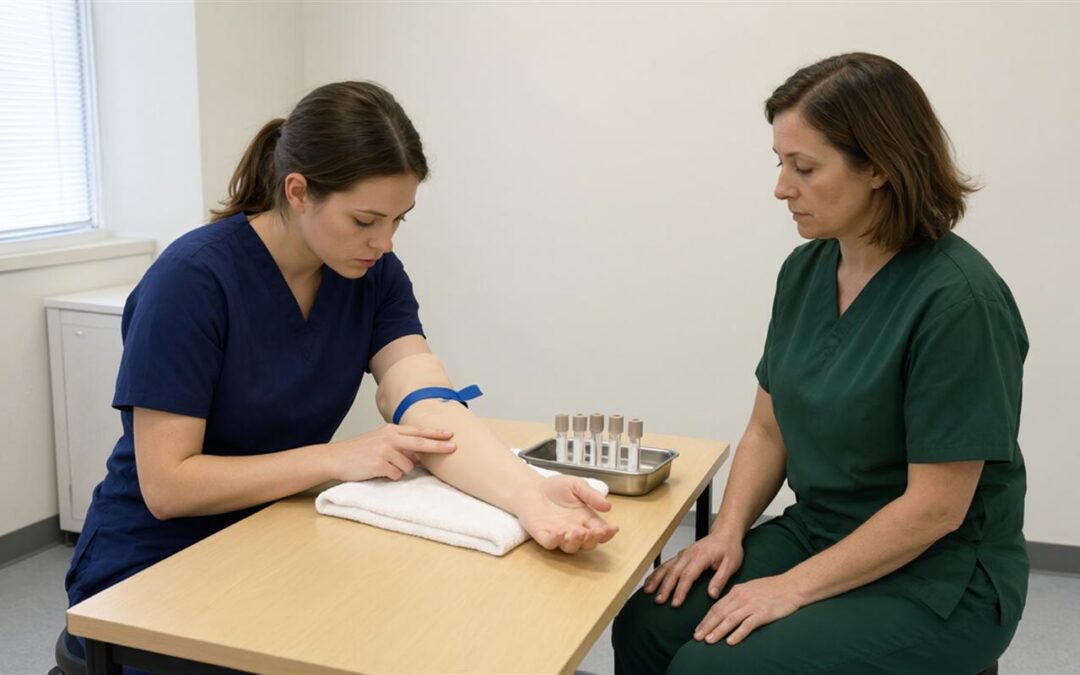
The core of the job is a blood draw. Venipuncture on a vein, capillary puncture for smaller volumes, then the steps that protect the sample: correct tube order, labeling at the bedside, and handling that keeps the specimen intact until it reaches the lab. Much of the risk in phlebotomy sits in those steps rather than in the needle.
Patient preparation takes real time too. Explaining what happens next, positioning an arm, choosing a site, and knowing when to stop and ask for help on a difficult draw are part of the skill set.
The work is spread across hospital floors, clinics and physician offices, reference laboratories, blood donation centers, and mobile or in-home collection. The training behind the title mixes classroom work with supervised draws, and a step-by-step phlebotomy training timeline lays out how those weeks usually fall.
What the Two Roles Have in Common
Both jobs are measured on accuracy and on the experience of the person in the chair. A mislabeled tube means a redraw, and a missed change in a vital sign means someone else catches it later. Both roles also carry the same hygiene and safety habits, and both answer to a licensed clinician above them.
The patient care technician vs phlebotomist comparison usually comes down to how much variety you want inside a shift. One role is a stream of small jobs that keep a unit moving. The other is a procedure performed to a standard, with the same steps every time and little room for improvisation.
Both are also entry points. Neither title assumes a degree, and both are usually filled by people who trained in a short program rather than a long one, which is why students tend to weigh them together.
Where the Training Paths Diverge
Depth of curriculum is the real difference. Patient care technician training carries a broader curriculum than phlebotomy training, so those programs commonly run longer than a single-skill course. More tasks mean more supervised practice before you are trusted with a patient on your own.
The phlebotomy course at DuMonde Training Center is published at 80 hours: 48 classroom and laboratory hours, then 32 onsite clinical hours completed within three weeks after the classroom portion, four weeks in total. Short, clinical, and built around one procedure.
If you are weighing the two on time alone, the published course list and program lengths give you hours to compare instead of calendar weeks, which can flatter a thin schedule. A course can stretch across many weeks while holding very few contact hours.
Which Role Fits the Way You Want to Work
If the question you keep circling is “should I become a PCT or phlebotomist,” the answer usually sits in how you like to work rather than in the title. Do you want the same set of steps, done to a standard, with the satisfaction of getting steadier at them? Phlebotomy fits that temperament. The work is procedural, the feedback is immediate, and the skill is easy to describe to an employer.
Or do you want to be the person who handles whatever the unit needs in the next ten minutes, whether that is a transfer, a set of vitals, a specimen, or a question from a family member? Patient care technician work fits that. It is less repeatable, harder to sum up in one sentence, and it keeps you with the same patients through a shift.
One practical test: picture the last hour of a long shift. Repetition under time pressure suits some people and wears down others, and only you know which one you are.
What Neither Role Is
Neither title is a nursing credential, and neither one replaces the licensed staff above it. A patient care technician carries out assigned tasks and reports what changed; the assessment, the care plan, and the decisions stay with the nurse. A phlebotomist collects and handles the specimen, while the reading of the result belongs to the laboratory and the clinician who ordered it.
It is also worth saying what the two are not. They are not interchangeable on a resume, and one does not quietly count as the other. The titles describe different task lists, which is why the training differs and why a posting tends to name the specific credential it wants.
Can You Start With One and Add the Other?
Yes, and the common order runs through a foundational care credential first. DuMonde’s CNA program runs three weeks under Georgia’s Certified Nurse Aide Training Program standards, with classroom and hands-on lab practice, and evening or weekend sessions extend that timeline. Graduates are eligible for the National Nurse Aide Assessment Program exam, and passing candidates enter the State Nurse Aide Registry.
That credential puts you on a floor with patients, and phlebotomy can follow as an add-on once you are working. Starting with phlebotomy is also possible, and it is the shorter route to one specialized task. What it does not give you is the wider patient-care experience, so the second credential usually gets added later rather than skipped.
Order matters less than it looks on paper. Employers hire for the credential a posting names, so read a few local postings before deciding which path to train for first, and read the sequence as a schedule rather than a hierarchy.
How to Compare Training Programs in Georgia
Ask for the hours split rather than the calendar length. A program that gives you generous classroom and laboratory time plus a supervised clinical placement is doing more for you than one that front-loads lectures and leaves you to arrange your own draws.
Then ask three questions. Who supervises the clinical portion, and where? Which credential are graduates eligible to sit for, since expectations differ by employer and setting? And does the schedule survive a working week, given that evening and weekend sessions can stretch a program past its published length?
Length is not the only figure worth comparing either. DuMonde’s medication aide course runs two to five days and its CPR and first aid course is a one-day session, while the CNA and phlebotomy programs run weeks. For the wider picture, how the six allied health roles compare side by side is a quicker way in than reading six separate program pages.
Key Takeaways
- The technician’s task list is wide and employer-set, so ask what the job includes before you enroll.
- A phlebotomist performs one technical procedure to a standard, with labeling and handling steps built in.
- Both sit under licensed staff, and both are judged on accuracy and on how the patient is handled.
- Phlebotomy training is short and clinical: 80 hours over four weeks at DuMonde Training Center.
- The order you take the two in matters less than the credential the postings you want actually name.
Conclusion
DuMonde Training Center in Roswell trains both titles, so the decision can be weighed against published course lengths rather than guesswork. Choose the shape of shift you want first, then the credential that gets you onto that floor. Schedules and entry requirements for either path sit on the Roswell training center’s contact page, and a call is the shorter route if you already know which one you want.