Quick Answer: The phlebotomy certification exam is designed to evaluate whether you can perform blood draws safely and consistently, not just recall information. Many students prepare for the written portion but underestimate how precise and repeatable their hands-on skills need to be.
Introduction
By the time students reach the exam stage, many are still unsure about what matters most. Some resources focus heavily on memorization, while others barely explain the skills portion.
That is where preparation often falls apart. Studying alone does not always translate into passing if the full process has not been practiced correctly. The exam reflects real patient-care scenarios, and the gap between knowing and doing is where avoidable mistakes happen.
What the Phlebotomy Certification Exam Actually Tests
The exam evaluates whether you can perform blood collection safely, accurately, and consistently in a clinical setting. It measures both knowledge and execution.
- Understanding procedures and safety standards
- Following the correct order and technique
- Accurate labeling, handling, and documentation
- Clear, professional patient interaction
Students who rely only on notes often hesitate during key steps, and hesitation can lead to missed details.
Written Exam Topics
- Anatomy and physiology basics
- Order of draw
- Infection control procedures
- Specimen handling and labeling
- Patient identification protocols
These topics are usually straightforward to review. The bigger challenge is recalling the information quickly and applying it in the correct sequence.
Skills and Practical Competencies
This is where many students run into trouble. The exam expects a clean, complete process from start to finish.
Common mistakes include skipping steps like verifying patient identity or following the correct labeling sequence. These are not minor details. They affect safety and can be the difference between passing and needing to retest.
Consistency matters more than speed. If the process is not repeatable, it is harder to perform well under pressure.
Common Certification Exams and What Makes Them Different
Several certification bodies are widely recognized, including NHA, AMT, and NCCT. Each has its own format, scoring approach, and eligibility requirements.
One common mistake is assuming all exams are the same. That can lead to studying the wrong material or missing key expectations for your specific test.
If the pathway feels unclear, reviewing the steps to start your phlebotomy career in Georgia can help connect training, certification, and what comes next.
How to Prepare for the Phlebotomy Exam Effectively
Preparation is not just about how much time you spend studying. It is about whether you can perform the process correctly without hesitation.
Students sometimes spend hours reviewing notes but still struggle because they have not practiced the full procedure from start to finish.
The shift has to be from memorization to execution.
Study Strategies That Actually Work
- Use practice exams to get familiar with question format
- Repeat key concepts until recall is quick
- Use flashcards for terminology and order of draw
- Practice step sequences out loud
- Study in timed sessions to build confidence under pressure
Passive studying is where problems often start. Reading without applying the material can lead to hesitation, and hesitation can lead to errors during testing.
Practicing Clinical Skills
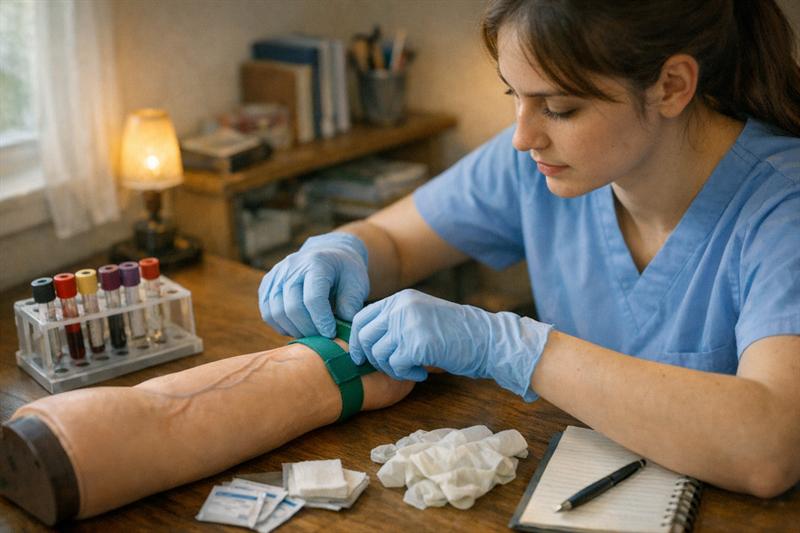
Hands-on repetition is what builds reliability.
Many students underestimate how much practice is needed. Performing venipuncture a few times is rarely enough to build consistency. The steps need to feel routine.
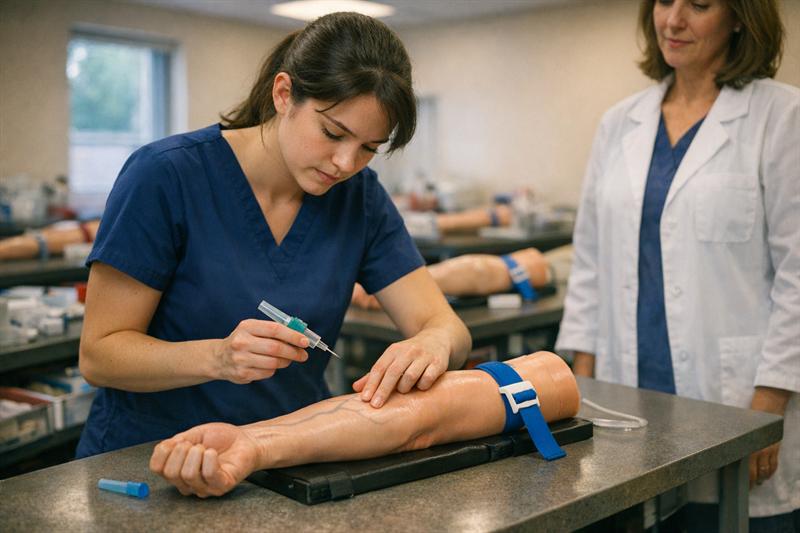
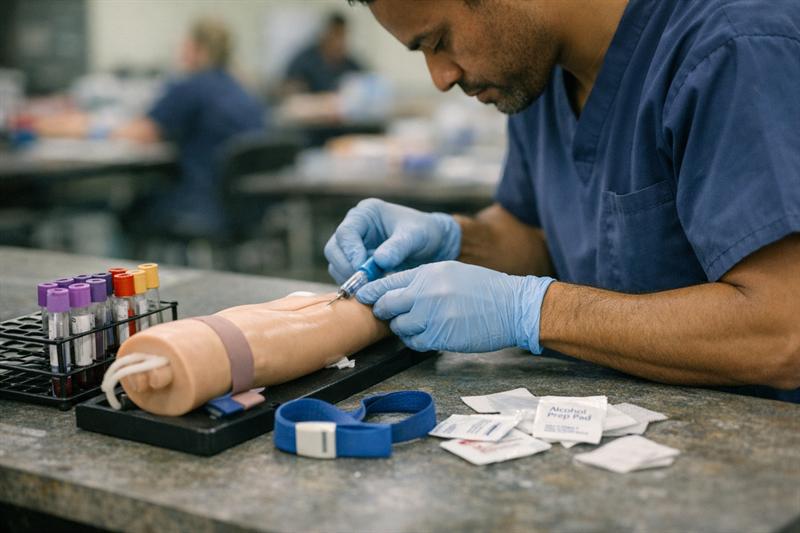
Structured training environments that focus on repetition and correction can help close this gap. Seeing how skills are practiced in realistic settings, like in phlebotomy training labs, shows how technique improves with guided repetition.
Most Common Mistakes Students Make Before the Exam
- Focusing only on written material
- Skipping small but required steps
- Not practicing full procedures repeatedly
- Poor time management during preparation
- Confusing familiarity with readiness
Many students recognize the material and assume they are ready, but recognition does not always translate into correct performance.
These patterns closely match the issues outlined in common blood draw errors new phlebotomy students can avoid, where small mistakes can create larger problems.
How Training Programs Impact Exam Success
Training structure directly affects how prepared a student feels on exam day.
Programs that focus only on information can leave gaps in execution. Programs that emphasize hands-on repetition, correction, and realistic clinical expectations tend to support more consistent performance.
This is where outcomes begin to separate. When students have practiced under realistic conditions, they usually move through the process with fewer errors and less hesitation.
What Happens After You Pass the Exam
Passing the exam shows that you have met the requirements for certification and are prepared for entry-level phlebotomy responsibilities. It can help qualify you for roles in hospitals, clinics, and labs, depending on employer requirements.
The same habits developed during training carry into the workplace. Strong technique and consistency can make the transition smoother and help reduce early mistakes.
If you are deciding where to work, understanding different environments matters. This is explained in hospital vs. clinic phlebotomy jobs, where expectations and workflow differ.
Key Takeaways
- The exam evaluates both knowledge and hands-on skill
- Memorization alone is not enough
- Small procedural errors are a common reason candidates need to retest
- Repetition builds consistency and confidence
- Training quality influences exam readiness
Conclusion
The main challenge is usually not understanding the material. It is performing each step correctly without hesitation.
When that gap is not addressed, it can lead to missed steps, inconsistent technique, and unsuccessful exam attempts. These outcomes are often tied to limited hands-on practice or incomplete preparation.
Dumonde Training Center focuses on building repeatable, real-world skills that align with how certification exams are typically structured. That approach can help reduce errors and improve consistency during testing.
If preparation feels uncertain, the next step is to strengthen hands-on skills in a structured setting. That is what helps move preparation from knowing to performing.
Frequently Asked Questions
How hard is the phlebotomy certification exam?
The exam is manageable with the right preparation but becomes more difficult when skills are inconsistent. The practical portion is often the most challenging because small errors can affect the overall result. Repetition and structured practice help improve performance.
What score do you need to pass the phlebotomy exam?
Passing scores vary by certification provider. Each organization sets its own standard, so it is important to confirm the requirements for your specific exam. This helps guide focused preparation.
How long should you study for the phlebotomy exam?
Many students prepare over several weeks, combining review with hands-on practice. The exact timeline depends on experience, schedule, and training structure. Consistent practice is usually more important than total study time.
What is the most important skill for passing the exam?
Consistency in technique is critical. Errors in sequence, labeling, or patient identification can lead to an unsuccessful result even when knowledge is strong. Repetition helps build that consistency.
Can you pass the phlebotomy exam without hands-on practice?
It may be possible, but it is much harder. The exam evaluates applied skills, not just knowledge. Without practice, mistakes are more likely during testing.
What happens if you fail the phlebotomy certification exam?
Most certification organizations allow retakes after a waiting period. The next step is usually to identify weak areas and work on them through focused study and practice before retesting.