Quick Answer: The real challenge is not choosing the “better” career. It is choosing the right starting point. Phlebotomy is often one of the fastest ways to enter healthcare, while medical assisting offers broader long-term flexibility. The right choice depends on whether you need speed or range first.
Many people hesitate here. Both paths can seem similar at first, but they lead to different daily routines and career directions. At Dumonde Training Center, many students spend too much time trying to choose perfectly, and that delay is often what holds them back.
The better move is to start with a path that gets you working, then build from there.
What Does a Phlebotomist Do?
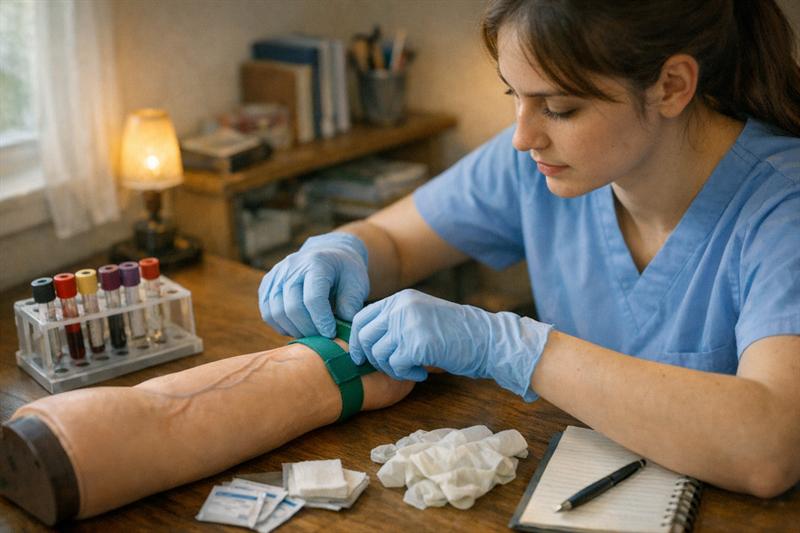
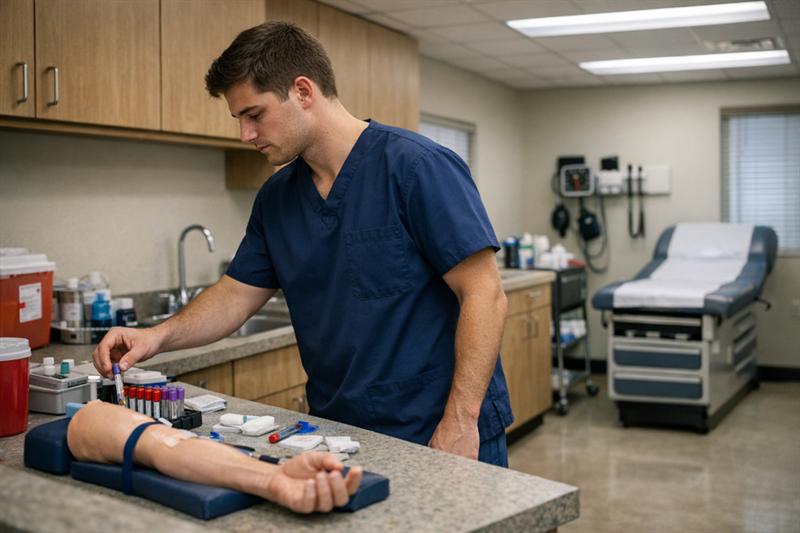
Phlebotomy is a focused clinical role centered on collecting blood samples. It is hands-on, repetitive, and built around consistency and accuracy.
Core Responsibilities
Phlebotomists draw blood, label specimens, and help make sure samples are handled correctly. They also prepare patients and help them stay calm during the process.
Many new students expect this role to be purely technical, but communication matters just as much. When patients feel uneasy or unclear about what is happening, draws can become more difficult and the process can slow down.
Work Environment
Phlebotomists typically work in hospitals, labs, and clinics. The pace is usually steady, and the work is structured around accuracy, workflow, and patient volume.
To see how this plays out in real settings, review what working as a phlebotomist looks like each day.
Training Timeline
Phlebotomy training is usually shorter and focused on one core skill set. The goal is to build repetition and confidence quickly.
That is one reason many people start here. It can allow you to enter the field sooner and begin gaining real experience instead of staying in training for a longer period.
What Does a Medical Assistant Do?
Medical assisting covers both clinical tasks and front-office responsibilities. The role is broader, and the day can shift depending on the setting.
Clinical vs Administrative Duties
Medical assistants may take vital signs, assist with exams, update patient records, and help manage scheduling. The balance between these tasks depends on the workplace.
This variety appeals to many students, but it also requires frequent task-switching. Without strong organization, the workload can feel harder to manage than expected.
Work Settings
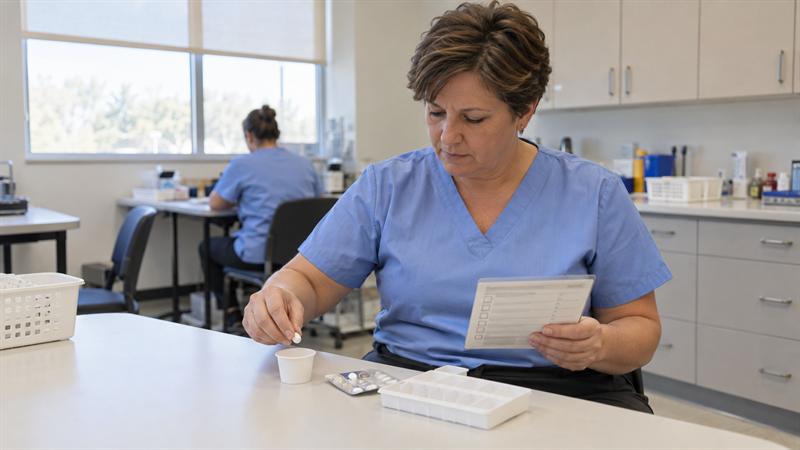
Most medical assistants work in outpatient clinics and physician offices. The environment is less repetitive than phlebotomy, but the pace can change quickly depending on patient flow.
Training and Certification
Training is longer because it covers multiple skill areas. Students need to learn both clinical procedures and administrative systems.
That broader preparation can lead to a more flexible role, but it usually takes more time to complete.
Key Differences Between Phlebotomy and Medical Assisting
The difference becomes clearer once you look at how the work is structured day to day.
Daily Responsibilities
Phlebotomy focuses on one core function. Medical assisting requires handling multiple responsibilities across patient care and office operations.
Training Time and Entry Speed
Phlebotomy typically allows faster entry into the workforce. Medical assisting usually requires a longer training period.
If getting to work quickly is your priority, that shorter timeline can make a meaningful difference. It gives you a chance to start earning experience sooner and decide what you want to build next.
Patient Interaction
Phlebotomists usually interact with many patients for short periods. Medical assistants often spend more time with each patient during visits.
Career Flexibility
Medical assisting offers broader flexibility from the start. Phlebotomy is more specialized, but it can also be combined with other certifications to expand your role over time.
Which Career Should You Start With?
The decision should match what you need right now, not just what sounds appealing long term.
Best Choice for Fast Entry into Healthcare
Phlebotomy is often the most practical starting point. It can help you get into the field quickly and begin building clinical experience.
Students who start working sooner often gain confidence faster because they are applying their skills in real settings. Those who wait too long to decide can lose momentum.
Best Choice for Long-Term Versatility
Medical assisting is a better fit for those who want a wider range of responsibilities from the beginning and are prepared for a longer training timeline.
When It Makes Sense to Do Both
A common path is to start with phlebotomy, then expand into medical assisting.
This removes some of the pressure from the decision. You are not locking yourself into one role. You are building a skill set step by step.
Career Pathways and Advancement Opportunities
Healthcare careers build over time. The starting point matters, but so does what you choose to add next.
Stacking Certifications Strategically
Adding certifications can increase your value in the job market. Someone with both phlebotomy and medical assisting skills may be able to take on a wider range of responsibilities in certain clinical settings.
The key is to keep building. Entering the field is a strong first step, but continuing to add skills can create more options over time.
Transitioning Into Advanced Roles
Both paths can support future moves into roles such as patient care technician or nursing. Progress depends on the next training step you choose and the experience you build along the way.
Training Options in the Atlanta and Roswell Area
Training quality has a direct impact on how prepared you feel once you start working.
Choosing a program based only on schedule or price can leave gaps in hands-on readiness. That matters most when you begin applying skills in a real healthcare setting.
Dumonde Training Center focuses on structured, skills-based training across programs like phlebotomy technician training and medical assistant preparation, so students are not learning in theory alone.
If you are comparing options, reviewing how to choose the right phlebotomy program in Georgia can help you identify what to look for before enrolling.
Key Takeaways
- Phlebotomy is often one of the fastest ways to enter healthcare
- Medical assisting provides broader long-term flexibility
- Starting sooner can help you build experience and confidence
- Certifications can be combined over time to expand opportunities
- Your first step does not have to limit your long-term path
Conclusion: Choosing the Right First Step in Healthcare
The real issue is not choosing between two careers. It is waiting too long to start.
When that delay continues, experience gets pushed back and skills take longer to develop. Starting with a clear, achievable step usually creates more momentum than trying to map out the perfect long-term plan before taking action.
In many cases, that means entering through a focused program and expanding your skills over time.
Dumonde Training Center provides structured training designed around how healthcare work actually happens. That focus can help students move from training into real roles with fewer skill gaps and more confidence.
If you are ready to move forward, the next step is choosing a program that aligns with your timeline and goals. You can also review how to choose the right allied health program to compare additional paths and make a clearer decision.
Frequently Asked Questions
Is phlebotomy easier than medical assisting?
Phlebotomy is more focused and usually quicker to learn because it centers on one main skill area. Medical assisting involves multiple responsibilities, which can make it feel more complex. Many people find phlebotomy easier as a starting point.
Can a medical assistant draw blood?
Yes, many medical assistants are trained to draw blood as part of their clinical duties. This depends on the workplace, the training completed, and the responsibilities of the role.
Which pays more: phlebotomist or medical assistant?
Medical assistants may have broader earning potential because their role can include a wider range of responsibilities. Pay varies based on experience, employer, and location.
How long does it take to become a phlebotomist vs medical assistant?
Phlebotomy training is usually shorter because it focuses on one primary skill set. Medical assistant programs typically take longer because they cover both clinical and administrative duties.
Can you start with phlebotomy and become a medical assistant later?
Yes, many people begin with phlebotomy and later expand into medical assisting. This step-by-step approach lets you build experience while continuing your training.
Which career is better for beginners in healthcare?
The better option depends on your goal. Phlebotomy is a strong starting point if you want to begin working quickly. Medical assisting may be a better fit if you want a broader role from the start.