For many students, the hardest part is not finding CMA training. It is figuring out whether they qualify, what the training actually involves, and how different it is from general direct care training. At Dumonde Training Center, that early confusion matters because students who enroll without understanding the role can run into delays, missed prerequisites, or a training path that does not fit.
If the goal is to move into a healthcare role with more responsibility, certified medication aide training in Georgia is best understood as a progression rather than a starting point. It often builds on existing care knowledge and calls for more accuracy, consistency, and readiness than many students expect at first.
What Is a Certified Medication Aide in Georgia?
A certified medication aide in Georgia is typically a trained care worker who supports medication administration in approved care settings, based on the role and responsibilities allowed in that setting. The work focuses on following medication procedures carefully, observing residents or patients closely, and handling tasks that usually require more precision than general daily care support.
The part many people miss is that CMA work is not just “passing meds.” It is a process-driven role where accuracy matters at each step. That is why students looking into a healthcare training path that fits their goals should understand the role itself before focusing only on class dates or pricing.
- Supports medication administration tasks in approved settings
- Follows structured procedures and safety steps
- Requires careful observation and attention to detail
- Often builds on existing patient-care knowledge rather than replacing it
How the CMA role differs from CNA responsibilities
CNA responsibilities usually center on direct personal care, daily support, comfort, and routine patient assistance. CMA training moves a student toward medication-related tasks, which makes the work more process-sensitive and less forgiving of skipped steps.
This is something many students underestimate. A common mistake is assuming CMA is just a small upgrade from CNA, when in practice it usually requires a different level of procedural discipline. A student may be comfortable with direct care but still find medication-related training more demanding if documentation, step order, or consistency is a challenge.
Where CMAs typically work
CMAs typically work in care environments where the role is recognized and used within the applicable rules and supervision structure. The work setting matters because the role is not used the same way everywhere.
- Assisted living settings
- Certain long-term care environments
- Other approved care settings that use medication aide roles
If a student assumes the CMA role works the same across every healthcare workplace, that can create confusion later. It is more useful to understand the role in the context of approved care environments, because that affects both training expectations and career planning.
Who Is Eligible for Certified Medication Aide Training in Georgia?
Eligibility matters because CMA training is built for students who already meet the entry requirements for medication-related instruction. Georgia programs may set specific prerequisites, and those requirements usually reflect readiness for training rather than simple admissions paperwork.
One common mistake is waiting until enrollment to check eligibility. That can lead to lost time, missed start dates, or finding out too late that another program needs to come first.
Common prerequisites students should confirm before enrolling
Before enrolling, students should confirm the exact program requirements and make sure they are ready for both the academic and practical demands of training.
- Admissions documents: Students may need basic enrollment paperwork completed correctly and on time.
- Training prerequisites: Some CMA pathways require prior care training before medication instruction begins.
- Background expectations: Program or setting-related requirements can affect eligibility and timing.
- Orientation steps: Pre-course calls, onboarding, or readiness instructions may matter more than students expect.
This usually becomes more difficult when students focus only on whether a seat is available. If the foundation is not in place, enrollment gets harder, and the training itself often becomes harder to keep up with.
Why active CNA status often matters
Active CNA status often matters because medication aide training frequently builds on hands-on care knowledge that students are expected to already understand. That includes routine patient interaction, basic care awareness, and the discipline required in a care environment.
At Dumonde Training Center, this is an important distinction. A student who already understands the pace and responsibility of care work may adjust faster to medication-related training than a student trying to learn both foundations at once. That is why readers who still need that first step may benefit from using a practical checklist for choosing a CNA training program in Georgia.
What to Expect in a CMA Training Program
Students should expect CMA training to be structured, detail-heavy, and competency-focused. It is not just a quick classroom review. It often combines instruction, procedural expectations, skills development, and some form of competency or testing process tied to medication administration training.
A common assumption is that memorization will be the hardest part. In practice, consistency is often the bigger challenge. Following the same process correctly every time, paying attention to details, and understanding why each step matters is what separates casual interest from real readiness.
Classroom topics and medication safety concepts
Classroom instruction usually covers the core concepts students need before they can move into medication-related tasks. That may include medication administration basics, safety principles, observation responsibilities, and the importance of following procedures exactly as taught.
- Medication administration basics
- Medication safety and error prevention concepts
- Observation and reporting responsibilities
- Procedure consistency and documentation awareness
This is where many students first realize CMA training is more exact than expected. If a student tends to rush, skip details, or rely on memory instead of process, that can create problems once skills and testing expectations increase.
Skills practice, checklists, and hands-on expectations
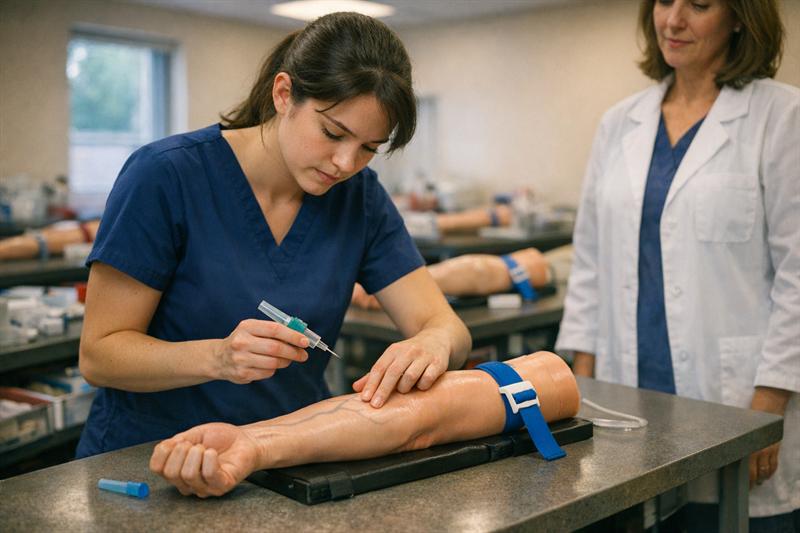
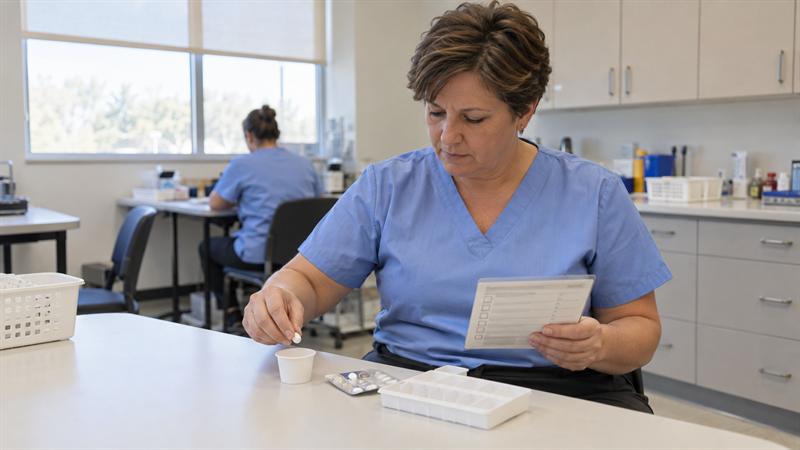
Students should expect some level of skills practice and competency tracking during training. Checklists and hands-on instruction matter because medication-related responsibilities generally cannot be learned well through theory alone. Students need to show that they can follow steps correctly, repeat them consistently, and perform within the expected structure.
Students who do well in lecture do not always perform the same way during skills validation. That gap matters. If a student understands the concept but cannot carry out the process in order, the issue is no longer knowledge alone. It becomes a performance issue that needs correction before testing or workplace transition.
Testing and competency expectations
Students should expect a competency-based process that includes knowledge review and some form of evaluation tied to the training pathway. The exact steps can vary, but the larger point stays the same: CMA training is meant to help show that a student can apply what they learned accurately, not just sit through a course.
If testing is treated like an afterthought, results often suffer. A student may feel comfortable during class, then struggle when asked to demonstrate steps in sequence, interpret directions carefully, or stay calm under evaluation conditions.
If any of these signs sound familiar, it may be worth slowing down and preparing more fully before class begins:
- You are still unclear on whether you meet the entry requirements
- You tend to learn quickly in conversation but struggle with step-by-step procedures
- Your work or home schedule leaves very little room for attendance or review time
- You are choosing a program based mostly on speed instead of structure
When those issues are already present, students usually need a clearer training plan, not a faster decision.
How to Prepare Before Your CMA Classes Start
The strongest preparation starts before the first day of class. Students who prepare well often have an easier time keeping up because they are not trying to solve basic schedule, paperwork, or expectation problems after training has already started.
This is where many avoidable setbacks begin. A common pattern is focusing on getting accepted, then realizing too late that attendance, organization, and mental readiness matter just as much as eligibility.
Documents, scheduling, and readiness planning
Before classes begin, students should have all required enrollment items ready and a realistic plan for completing the program successfully. That includes understanding class structure, any orientation steps, and the time needed to stay on track.
- Gather required admissions and enrollment documents early
- Review attendance and scheduling expectations carefully
- Plan around work, family, and transportation responsibilities
- Understand what needs to be completed before course completion
This often becomes more difficult when students assume they will figure it out as they go. That approach works poorly in skills-based healthcare training, because once a student falls behind on readiness basics, the class itself usually feels more difficult than it actually is.
Study habits that help students keep up
The best study habits for CMA students are usually simple and repeatable. Review terminology consistently, take organized notes, ask questions early, and practice following instructions in order rather than relying on memory alone.
Precision-based training can expose disorganization quickly. If notes are scattered, steps are half-remembered, or confusion sits too long without being addressed, performance often drops during skills review and testing.
Questions to ask before choosing a program
Before choosing a CMA program, students should look past convenience and ask the questions that affect training quality and readiness.
- What are the current prerequisites for enrollment?
- How is skills practice handled during the program?
- What does the testing or competency pathway look like?
- What support is available if a student needs clarification?
- How is the class schedule structured from start to finish?
Students who ask better questions often make better program decisions. At Dumonde Training Center, that matters because the right fit is not just about starting quickly. It is about choosing a training path that matches the student’s current readiness and long-term goal.
Is CMA Training the Right Next Step for Your Healthcare Career?
CMA training is often the right next step for students who want to build on care experience and move into a more procedure-focused role involving medication responsibilities. It is usually a strong fit for someone who already understands care settings and wants a more structured next move rather than a complete change in direction.
The wrong move is choosing CMA just because it sounds like advancement. If a student is not eligible yet, is not comfortable with detail-heavy tasks, or is still unsure which healthcare path fits best, that decision can create friction later.
When CMA makes sense after CNA training
CMA often makes sense after CNA training when a student is already comfortable with patient care and wants to expand responsibilities in a logical way. Students who do well in this transition usually like structure, follow instructions carefully, and understand that medication-related work leaves less room for improvisation.
- Strong fit for students who already understand care routines
- Strong fit for students who want more responsibility without changing fields
- Strong fit for students who work well with process and consistency
When another path may be a better fit
Another path may be a better fit when a student is not yet eligible for CMA training or wants a different kind of healthcare role. Some students are better served by starting with CNA training first. Others may find that a different allied health path matches their interests more clearly.
That is why comparison matters. A student deciding between care-based and technical training paths may benefit from reviewing how to choose the right allied health program before committing. The best next step is usually the one that matches both current readiness and the kind of work the student actually wants to do every day.
Key Takeaways
- Certified medication aide training in Georgia is best understood as a defined next-step pathway, not a casual short course.
- Eligibility matters because CMA training often builds on existing care knowledge and readiness.
- Students should expect classroom learning, procedural expectations, skills practice, and competency-focused evaluation.
- Many training problems start before class begins, especially when scheduling, preparation, or prerequisites are not handled early.
- Dumonde Training Center can help students move forward when they need a clearer, more structured path into CMA training.
Conclusion
The real challenge is not just finding certified medication aide training in Georgia. It is knowing whether the student is prepared for the level of responsibility that comes with it. When that is misunderstood, students can choose programs too quickly, miss important prerequisites, or enter training without the structure needed to succeed.
When that preparation is overlooked, the result is often wasted time, frustration, and a weaker start in a role that depends on accuracy. Dumonde Training Center is a practical next step for students who want clear expectations, a stronger understanding of the CMA pathway, and training that reflects the day-to-day demands of medication-related care work. If the goal is to move forward with more confidence instead of guesswork, this is the point to choose a program built around readiness, not just enrollment.
Company Approach
At Dumonde Training Center, the approach is practical from the start. Students need to understand not just what CMA training is called, but what it asks of them day to day. That includes checking eligibility early, understanding how procedural learning differs from general care support, and choosing training based on fit rather than speed alone.
This article takes a clear position for that reason. Students often do better when they treat CMA training as a serious role progression, prepare before the first class begins, and choose a program with a structured path into medication-related responsibilities. That is the approach Dumonde Training Center is positioned to support.
FAQ
Do you have to be a CNA before starting certified medication aide training in Georgia?
In many Georgia CMA pathways, prior CNA status is treated as an important eligibility requirement because medication aide training builds on basic patient-care knowledge rather than replacing it. The key distinction is that CMA training is not designed to teach foundational bedside care from scratch. It assumes the student already understands core care routines, communication expectations, and how to work safely in a care setting.
That changes the meaning of the requirement. It is not just administrative. It reflects the fact that medication-related responsibilities usually require a stronger base than entry-level interest alone.
What do students actually learn in CMA classes?
CMA classes typically focus on medication administration concepts, safety procedures, observation and reporting responsibilities, documentation awareness, and competency-based skills practice. What commonly gets misunderstood is that the training is not just about learning medication names or memorizing steps.
Students are also being trained to follow procedures accurately, notice issues that need to be reported, and complete tasks in a consistent way. That is why stronger programs often combine instruction with skills validation instead of relying on lecture alone.
How long does certified medication aide training usually take in Georgia?
The better question is not just how many days a course lasts, but how the program is structured. Some programs move quickly, but that does not make the role simple. A short schedule can still involve concentrated learning, skills checkoffs, and testing steps that require serious preparation.
The main point is that duration alone does not tell a student how demanding the training will feel. Structure, pace, and expectations matter more than the calendar by itself.
What should you do before enrolling in a CMA program?
Before enrolling, students should understand the prerequisites, gather any required admissions documents, review schedule expectations, and make sure they can realistically keep up with attendance and coursework. A common mistake is focusing only on seat availability or price while overlooking readiness factors that affect completion.
For example, a student who has not planned around work hours, family responsibilities, or study time may meet the entry requirements and still struggle once the course begins. The real implication is that preparation is partly administrative and partly practical.
Where can a certified medication aide work after training?
CMAs may work in care environments where the role is recognized and used under the applicable rules and employer structure. The most important distinction is that CMA responsibilities are setting-specific, not universal across every healthcare environment.
That means training may prepare someone for medication-related duties in certain care settings while not automatically translating the same way everywhere else. Readers should understand the role in terms of approved care contexts rather than assuming it applies broadly to any medical workplace.
How do you know if CMA training is the right next step after CNA?
CMA training is usually a strong fit for someone who is already comfortable in a patient-care environment and wants to move toward more procedure-driven, medication-related responsibility. The real decision point is not whether CMA sounds like a promotion, but whether the student is drawn to the accuracy, structure, and accountability involved in medication support.
Someone who prefers broader direct care tasks may stay more aligned with CNA-type work, while someone interested in a different technical pathway may compare other allied health options. What matters most is whether the day-to-day nature of the role fits the kind of work the student wants to do.