For many students, this role stands out because it can offer an entry point into healthcare without starting in direct bedside care. At Dumonde Training Center, the focus is on helping students understand what the work may actually involve before they choose a training path. That matters because dietary aide work is tied to daily operations in care settings, and unclear expectations can lead to the wrong program choice.
What Is a Dietary Aide?
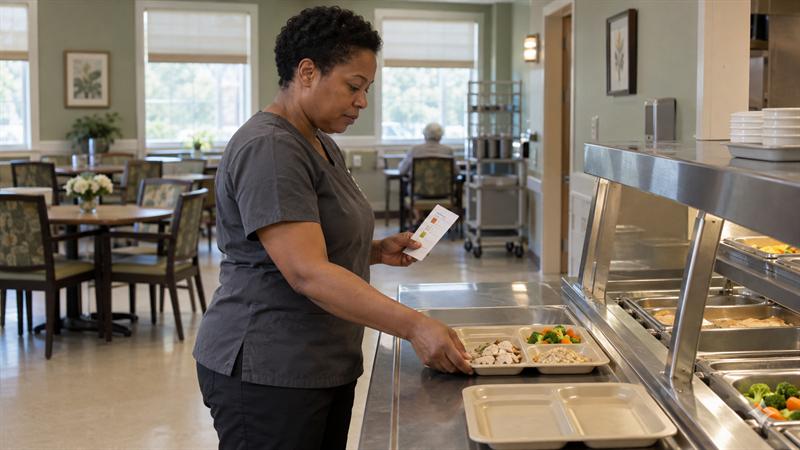
A dietary aide supports meal-related routines in healthcare and residential care settings. The role often includes meal preparation support, tray setup, meal service, kitchen cleanliness, and following instructions related to diet needs and daily schedules.
This is different from general restaurant or retail food service. In care environments, meals are part of a larger support system. Many students assume the work is mostly kitchen-based, then realize it also depends on consistency, sanitation, and attention to instructions.
Core Responsibilities of a Dietary Aide
- Meal preparation support: This often includes portioning food or helping organize meal service around facility routines.
- Tray setup and service: Dietary aides often help prepare trays and support meals moving out on schedule.
- Sanitation and food handling: Clean work areas and proper food handling are generally part of the job every day, not occasional tasks.
- Kitchen organization: Supplies, serving areas, and cleanup routines usually need to stay organized so the workflow stays steady.
- Following diet instructions: This is one of the areas where accuracy matters most. Small mistakes can create larger problems in a care setting.
- Team coordination: Dietary aides typically work within a larger system, so communication with supervisors and staff helps meals run smoothly.
How the Role Supports Patients and Residents
Dietary aides help keep one of the most routine parts of daily care on track. Meals generally need to be timely, prepared cleanly, and aligned with instructions. When that process breaks down, it can affect more than the kitchen. It may slow routines, create confusion, and add pressure for the rest of the team.
That is why training should make the role clear early. A dietary aide is part of the daily structure of a care setting. The work supports comfort, consistency, and order, which is one reason employers often look for people who can follow systems well.
Where Dietary Aides Commonly Work in Georgia
Dietary aides commonly work in long-term care facilities, assisted living communities, rehabilitation settings, and institutional food service environments such as hospitals. The title may stay the same, but the daily workflow can change by setting.
That difference matters when choosing a dietary aide program in Georgia. One common mistake is assuming one work setting feels exactly like another. It usually does not. The pace, structure, and expectations can shift depending on who is being served and how the facility operates.
Nursing Homes and Long-Term Care Facilities
In long-term care, meal service usually follows a steady routine with recurring resident needs. This is where consistency becomes a major part of the job. Staff may need to work around schedules, recurring preferences, and established daily patterns.
This is also where following instructions matters most. If you are looking at a role that emphasizes routine, timing, and repeated meal cycles, it usually means the facility depends on dependable daily execution more than speed alone.
Assisted Living Communities and Rehabilitation Settings
These settings can look different from long-term care because support needs may vary more from person to person. Some residents may be more independent, while others still need close structure around meals and daily routines.
People sometimes assume assisted living is simply a lighter version of the same job. In practice, the work still relies on organization, sanitation, and communication. The difference is often in how the environment is structured, not whether standards matter.
Hospitals and Institutional Food Service Environments
Hospital and institutional environments are often more process-driven and fast-moving. Meal service may be part of a larger, more structured system with closer workflow coordination.
This can mean a heavier focus on timing, volume, and consistency across the team. If you prefer predictable systems and an organized pace, this setting may feel like a better fit. If you struggle when routines move quickly, gaps in training can become obvious quickly.
What Skills Matter Most in a Dietary Aide Role
The most important dietary aide skills are not vague people skills. They are work-readiness skills that help in routine, time-sensitive, sanitation-focused settings.
This is where many job descriptions stay too broad. What often matters most is whether someone can stay organized, follow instructions, and repeat tasks accurately without losing focus.
Food Safety, Cleanliness, and Organization
These are foundational skills, not extras. In care settings, poor cleanup habits, weak organization, or casual food handling can create bigger workflow problems. That often becomes more noticeable when someone has not been trained to treat sanitation as part of every task.
Strong training should help students build habits, not just memorize terms. That distinction matters because the role depends on repeatable standards.
Communication and Attention to Diet Instructions
Dietary aides need to pay attention to instructions and communicate clearly with supervisors or team members. In care settings, meal service is not just about getting trays out. It is also about getting them out correctly and within the structure the facility depends on.
If you are seeing a role that mentions special diets, resident routines, or facility meal systems, it usually means attention to detail is one of the first things employers notice. This is also where training quality starts to matter more. Students need to understand why instructions are part of the job, not just something to remember occasionally.
Reliability in Fast-Paced Care Environments
Reliability is one of the clearest signs of fit for this role. Facilities generally depend on people who show up ready, work within routine, and stay steady even when service moves quickly.
Some people choose this path because it seems simpler than direct patient care, then find the pace and repetition harder than expected. If you do well with structure, teamwork, and clearly defined tasks, this role may make sense. If you need constant variety, the day-to-day rhythm may feel harder to sustain.
What to Look for in a Dietary Aide Training Program in Georgia
The best dietary aide training Georgia students can choose is a program that prepares them for the workflow of the job. Weak programs explain the role without doing enough to prepare students for the routine, pace, and expectations that come with it.
That is where many students lose time. A course should not just describe duties. It should help students understand sanitation, pace, routine, communication, and the structure of meal service in care environments.
- Role-specific instruction: The program should clearly explain what dietary aides do in healthcare and residential care settings.
- Food safety and sanitation basics: This should be central, not treated like a side topic.
- Meal service workflow: Students should learn how tasks connect during daily operations.
- Communication and professionalism: Team-based work depends on clear communication and follow-through.
- Practical job readiness: The program should build habits that can transfer into real settings.
If you are comparing training options, it can also help to see how other healthcare paths are structured. Articles like How to Choose a CNA Training Program in Georgia: A Practical Checklist for Students and Patient Care Technician Training in Georgia: Roles, Settings, and Skills to Build show how different support roles prepare students for different environments.
Curriculum Topics That Support Job Readiness
- Food safety and sanitation basics
- Meal service routines and workflow
- Communication and professionalism
- Awareness of diet instructions and special meal considerations
- Understanding how care settings operate day to day
Hands-On Learning and Practical Instruction
Practical instruction matters because this role depends on repeatable tasks done the right way. Students can feel confident after reading about duties, then feel unprepared when they have to follow a real routine under time pressure.
Hands-on learning helps close that gap. It gives students a clearer sense of how tasks flow, where mistakes are more likely to happen, and what employers often expect at the start.
Schedule, Support, and Training Environment
Schedule and training structure matter more than many students expect. If a program does not fit your availability or learning style, completion may get harder and retention can drop.
If these signs sound familiar, it may be worth taking a closer look before you enroll:
- You understand the job title but still cannot picture the day-to-day work.
- You are comparing programs based only on availability, not what they actually teach.
- You want an entry-level healthcare role but do not want to start in direct patient care.
- You need a training path that makes job expectations easier to understand.
When these signs are present, the next step is to choose a program that explains the role clearly and builds practical readiness instead of leaving those gaps in place.
Is Dietary Aide Training a Good Fit for Your Career Goals?
Dietary aide training is often a strong fit for students who want to enter a care-based environment in a structured support role. It is usually most practical for people who do well with routine, teamwork, and task accuracy.
This section matters because the wrong fit can create avoidable frustration. Some students choose a program based on the idea of healthcare work, not the reality of the daily role. That often leads to second-guessing later.
Who May Benefit From This Type of Entry-Level Training
- People who want exposure to healthcare settings without starting in direct patient care.
- People who prefer routine, structure, and clearly defined responsibilities.
- People who work well in team-based environments.
- People looking for an entry-level healthcare training path tied to daily facility operations.
How It Compares With Other Healthcare Training Paths
Dietary aide training is different from CNA training because the focus is meal-related support rather than direct resident or patient care. It also differs from patient care technician training, which often goes further into clinical support tasks.
If you are deciding between these paths, the real question is not which title sounds stronger. The better question is what kind of daily work fits you. For a closer comparison of care-based roles, CNA vs Patient Care Technician: How the Roles and Training Paths Compare can help clarify where responsibilities begin to shift.
Key Takeaways
- Dietary aides support meal service, sanitation, and routine food-related tasks in care settings.
- The role is often more structured than general food service because it depends on timing, instructions, and team coordination.
- Work settings can include long-term care, assisted living, rehabilitation, and institutional food service environments.
- Strong training should prepare students for sanitation, workflow, communication, and practical job readiness.
- The best fit usually comes down to whether you prefer structured support work over direct patient-care responsibilities.
Conclusion
The real question is not whether dietary aide training sounds accessible. It is whether the program prepares you for the pace, structure, and accuracy the job often requires. When that is not addressed well, students may choose programs with the wrong expectations, and those gaps can show up once real workflow begins.
Dumonde Training Center can be a practical next step for students who want a clearer path into this kind of healthcare support role. Success in dietary aide work is often tied to understanding the environment, the routine, and the standards before stepping into the role. When that foundation is built early, decision-making gets easier and training becomes more useful.
Company Approach
At Dumonde Training Center, the approach is to help students understand more than just the course name. A strong training path should connect responsibilities, work settings, and day-to-day expectations so students know what they are preparing for.
This is where generic career content often falls short. It talks about opportunities in broad terms and skips over how the work actually functions. Dumonde Training Center is most useful when it helps students connect the role to real routines, practical skills, and the kind of environment where they are most likely to succeed.
FAQ
What does a dietary aide do in a healthcare setting?
A dietary aide supports meal-related routines such as tray setup, meal service, cleaning, and food handling in healthcare or residential care environments. The role also depends on following instructions tied to schedules and meal needs.
What commonly gets misunderstood is that this is not just kitchen help. In care settings, meals are part of a larger daily system, so accuracy and consistency matter as much as speed.
Do you need training to become a dietary aide in Georgia?
Training is useful because it helps students understand the workflow, sanitation expectations, and role structure before starting work. Even in entry-level positions, that preparation often makes the role easier to step into.
The important distinction is not just whether training exists, but whether it teaches real job-readiness skills. Programs that stay too general usually leave students unclear about what the work actually requires.
Where do dietary aides usually work?
Dietary aides usually work in long-term care facilities, assisted living communities, rehabilitation settings, and institutional food service environments such as hospitals. The environment changes the pace and structure of the work.
For example, long-term care often centers on recurring routines, while hospital settings tend to be more process-driven. That difference matters because it changes what daily success looks like.
What should I look for in a dietary aide training program?
Look for a program that covers sanitation, meal service workflow, communication, and the practical structure of working in a care environment. Those topics usually show whether the training is built around real job expectations.
A useful distinction is whether the program explains how responsibilities connect, not just what the responsibilities are. That often separates a useful training experience from a thin overview.
Is dietary aide training a good first step into healthcare?
Yes, for people who want a support-based entry point into healthcare without starting in direct patient care. It is often a better fit for students who do well with routine, teamwork, and clearly defined daily tasks.
The main factor is fit. If you want hands-on clinical interaction, another path may make more sense. If you want structured work inside a care environment, dietary aide training is often a practical place to begin.
What is the difference between a dietary aide and a CNA?
A dietary aide focuses on meal-related support and food service routines in care settings, while a CNA is more directly involved in resident or patient care. That changes both the training focus and the day-to-day work.
What this means for decision-making is simple: the better choice depends on the kind of responsibilities you want. If you prefer structured support work tied to meal service, dietary aide training usually fits better. If you want direct care involvement, CNA training is the clearer match.