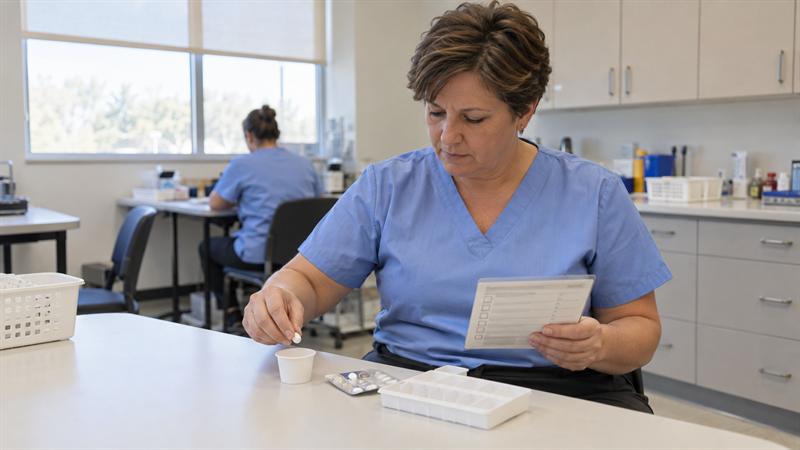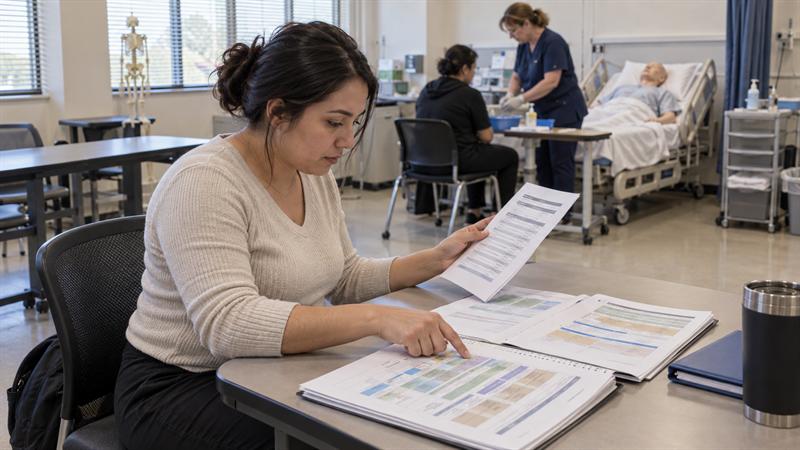
At Dumonde Training Center, many students start in the same place: they know they want to work in healthcare, but they are comparing roles with similar names that lead to very different kinds of work. Patient care technician training in Georgia can be a better fit for students who want direct patient interaction and a broader support role than some entry-level programs offer.
This guide explains what a Patient Care Technician does, where the role fits, what skills matter most, and how to tell whether this path matches your goals before you commit to the wrong program.
What Is a Patient Care Technician?
A Patient Care Technician is a healthcare support professional who helps patients with routine care needs and assists with basic clinical tasks under supervision. The role is closely tied to daily patient care, which is why it often appeals to students who want hands-on work instead of strictly administrative responsibilities.
For students researching programs, the key point is simple: PCT training is not just about learning separate tasks. It is about preparing for a role that combines observation, patient support, communication, and structured clinical routines. Readers who want a program page can review the Patient Care Technician training program offered by Dumonde Training Center.
- Supports patients with day-to-day care needs
- Works as part of a supervised care team
- Uses both patient interaction skills and technical care skills
- Helps maintain consistency in routine care and communication
How the role supports nurses and patient care teams
PCTs help keep care moving by handling routine support tasks, observing changes, and communicating clearly with the team. The role is not only about being helpful. It is also about being dependable in settings where small details can affect patient comfort, timing, and follow-through.
Many new students focus on the technical side first, but the day-to-day value of the role is also shaped by consistency, responsiveness, and attention to detail. When students underestimate that part of the job, they may like the idea of healthcare work but struggle with the pace and expectations of direct patient support.
How PCT work can differ from CNA responsibilities
PCT and CNA roles can overlap, especially in direct care support, but they are not the same in focus. CNA training is often associated with foundational bedside care, while PCT training may include a broader mix of patient-care-related skills depending on the program.
- CNA: more centered on foundational bedside and daily living support
- PCT: often appeals to students who want direct care plus added technical exposure
- Main difference: the mix of support tasks, clinical routines, and work setting expectations
This matters because students often assume the more familiar title is the safer choice. That can lead to a poor fit. If a reader is still sorting out foundational patient care training first, this practical checklist for choosing a CNA training program in Georgia can help clarify what to look for.
What Patient Care Technicians Commonly Do in Daily Care Settings
Patient Care Technicians usually support patients through a mix of routine care, observation, and communication tasks. The clearest way to understand the role is to look at the work by category instead of scanning a random duty list. That gives a more realistic picture of what the day may involve.
- Assist with routine patient support
- Monitor and report changes
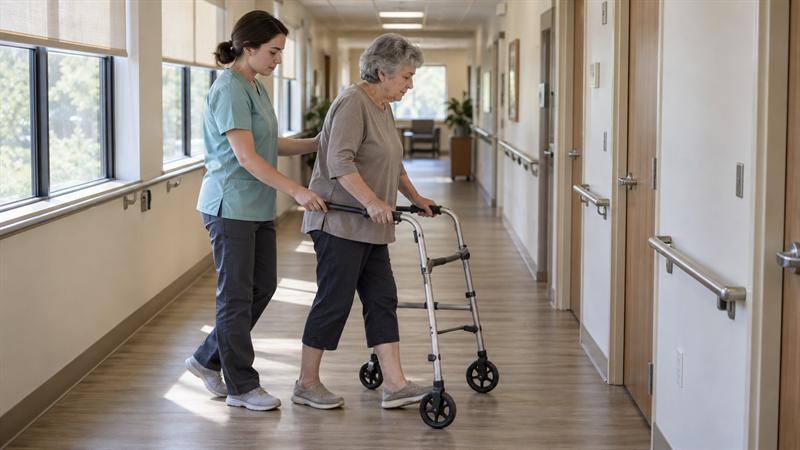
- Help with mobility and comfort needs
- Take part in structured care tasks assigned within the role
- Support accurate communication and documentation
Direct patient support tasks
Direct support often includes helping patients with routine care needs, comfort, movement, and day-to-day assistance within the care environment. This is the part of the role that draws students who want meaningful patient contact rather than back-office work.
This is also where expectations need to be realistic. Many students are drawn to healthcare because they want purposeful work, but direct-care roles may require patience, steadiness, and the ability to stay focused when tasks are repetitive or physically active. When that is overlooked, frustration can show up early in training and become more noticeable in fast-paced settings.
Monitoring, communication, and documentation responsibilities
Observation and communication are a major part of effective patient support. That includes checking routine information such as vital signs, noticing changes, and passing along accurate updates so the care team can respond appropriately.
New students often underestimate this part of the role. They picture tasks, not follow-through. In real care settings, incomplete communication can create confusion, and poor documentation can lead to missed details. That is why strong training should build habits around accuracy, not just task repetition.
Where Patient Care Technicians May Work in Georgia
Patient Care Technicians may work in hospitals, long-term care settings, rehabilitation environments, and other care settings where direct patient support is needed. The work can look very different from one setting to another, and that difference often matters more than students expect.
- Hospitals: faster pace, more coordination, frequent monitoring
- Long-term care: routine support and ongoing patient interaction
- Rehabilitation settings: structured support tied to progress and daily function
- Other care environments: support needs vary, but consistency remains important
Hospitals and acute care environments
Hospital and acute care environments often move faster and may require more frequent communication across the care team. Patients may change quickly, routines may shift, and support staff need to stay organized under pressure.
This is one of the areas where students can misread the role. Those who like variety, movement, and a quicker pace may be drawn to hospital settings. Students who prefer a slower, more predictable rhythm may notice that mismatch quickly if they choose based only on the program name.
Long-term care, rehab, and other support settings
Long-term care and rehabilitation settings often involve more continuity, more repeated patient interaction, and more routine-based support across the day. That can be a better fit for students who value relationship-building and a steadier workflow.
This is where setting preference becomes a practical decision point. Someone who wants ongoing interaction and consistency may prefer one type of environment. Someone who wants more pace and variety may prefer another. Ignoring that difference can lead to dissatisfaction even when the training itself was a good choice.
Skills a Strong Patient Care Technician Training Program Helps Build
A strong Patient Care Technician training program helps students build both technical care skills and the work habits needed to use those skills well. That distinction matters because many programs can list topics, but not every program prepares students for the demands of real patient-care work in the same way.
Students tend to progress more confidently when they understand that job readiness is not just about learning steps. It is also about using those steps consistently, communicating clearly, and staying steady in a care environment.
Technical skills
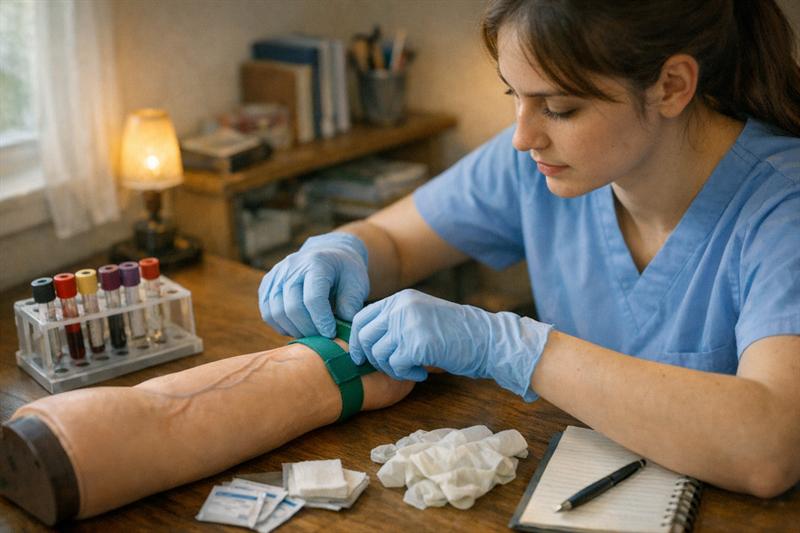
Technical training in a PCT program often includes core patient-care functions and may include exposure to additional clinical tasks depending on program scope.
- Vital signs
- Patient observation
- Mobility and positioning support
- Specimen-related or basic clinical support tasks, depending on program structure
- Possible exposure to EKG or phlebotomy-related skills, where applicable
This is where students need to look past the title and pay attention to what the program actually teaches. A broad program name does not automatically mean broader preparation. For students comparing technical training paths, How to Choose the Right Allied Health Program can help narrow the field based on the kind of work they want to do.
Patient interaction and care-team communication
Strong patient interaction skills matter because technical ability alone does not carry the role. PCTs need to communicate professionally, help patients feel supported, follow instructions carefully, and raise concerns when something changes.
Students who take communication seriously often become more dependable in clinical settings than students who focus only on procedures. Soft skills are not extra. In patient-facing work, they affect comfort, trust, and the quality of information that reaches the care team.
If any of these sound familiar, it is time to evaluate program fit more carefully:
- You want direct patient care, but not a role limited to one narrow task
- You are comparing CNA, PCT, and phlebotomy and still cannot tell how the daily work differs
- You want hands-on training, not just classroom explanations
- You need a program that matches your schedule and long-term direction
If those signs are present, the next step is not more guessing. It is a closer look at how the training is structured and what it is preparing you to do.
Who May Be a Good Fit for Patient Care Technician Training
Patient Care Technician training is often a strong fit for people who want a direct entry point into healthcare and prefer hands-on patient interaction over purely administrative or highly specialized single-task work. It often fits students who want variety within a care-support role and who are comfortable being part of a structured clinical team.
The key is fit, not just interest. A student may want to help people, but if they do not want routine patient contact, pace changes, or repeated care tasks, the role may stop feeling like a good match once training becomes more real.
Career changers and entry-level healthcare learners
This path often appeals to career changers and first-time healthcare learners because it offers a practical entry into patient-facing work. It gives structure to people who want a new direction but do not want to spend too much time moving between options that all sound similar.
Motivation matters, but it is not the whole picture. Reliability, emotional steadiness, and willingness to work within routines are often what separate interest from actual fit in direct-care training.
Students comparing PCT with CNA, CMA, or Phlebotomy
Students comparing multiple allied health paths need to focus on the kind of daily work they want most.
- PCT: a blend of direct patient support and broader care-related skill exposure
- CNA: foundational bedside care and support
- CMA: more aligned with clinic and medical office workflow
- Phlebotomy: more focused on blood collection and specimen-related work
This is where the comparison usually becomes easier. If the goal is patient support plus a wider care-task mix, PCT may stand out. If the goal is clinic flow or a narrower technical specialty, another path may make more sense. For a broader comparison, this guide to choosing the right allied health program gives a practical breakdown.
How to Choose a Patient Care Technician Training Program in Georgia
The best way to choose a Patient Care Technician training program in Georgia is to look past broad promises and evaluate how the program prepares students for real care settings. Programs differ in structure, support, hands-on experience, and role clarity. That is where the real decision gets made.
- Look for meaningful hands-on training
- Understand any prerequisites or training sequence
- Make sure the schedule matches your real availability
- Pay attention to how clearly the program explains role expectations
- Consider whether the training supports both technical skills and workplace readiness
Questions to ask before enrolling
- What specific skills are included in the training?
- How much hands-on practice is built into the program?
- Are there prerequisites or recommended steps before starting?
- What support is available during training?
- How does the program prepare students for real patient-care environments?
These questions matter because vague answers can point to vague preparation. When a program cannot explain how training connects to real work, confusion often follows later.
What to look for in schedule, hands-on practice, and support
Schedule matters because even a strong program becomes hard to complete if it does not fit the reality of work, family, or transportation demands. Hands-on practice matters because patient-facing roles are learned through repetition, correction, and confidence building, not through theory alone.
Support matters because adult learners often do better when expectations are clear from the start. Students sometimes choose based on convenience, then find out the structure does not support follow-through. That can lead to delay, frustration, or starting the process again elsewhere.
How Patient Care Technician Training Fits into Allied Health Career Paths
Patient Care Technician training fits into allied health as a support-role path for students who want direct patient contact and a broader day-to-day task mix than some other entry routes. It is part of a larger group of healthcare training options, but it fits a specific type of learner best.
The practical recommendation is simple: choose PCT when the goal is patient-facing work with both support responsibilities and structured clinical skill exposure. Choose another path when the work setting or task focus points more clearly in a different direction.
Building from foundational care skills
Many students are drawn to PCT because it builds on the logic of foundational patient support while expanding the skill mix. That makes it appealing for people who do not want to stay limited to one narrow function but still want strong patient contact at the center of the role.
This is where good progression thinking matters. Students often do better when they choose a path that matches how they want to work now and what kind of environment they want to grow into next.
When related programs may be a better fit
Sometimes another program is the better choice. CMA may be the stronger fit for someone focused on clinic routines and medical office support. Phlebotomy may be the better fit for someone who is specifically interested in specimen collection and blood draw skills. Dietary Aide may fit someone whose interest is nutrition support within care settings.
This is why title-shopping usually fails. The smarter move is to match the program to the work itself. Once the work style is clear, the right training path usually becomes easier to identify.
Key Takeaways
- Patient care technician training in Georgia is often best for students who want direct patient support plus a broader mix of care-related skills.
- The role makes more sense when viewed through daily workflow, not just job title.
- Work settings matter because hospital, rehab, and long-term care environments can feel very different in practice.
- Strong programs build both technical skills and dependable workplace habits.
- Choosing the wrong path often starts with unclear role expectations, not lack of motivation.
Conclusion
The real problem is not a lack of healthcare training options. It is that too many students choose a path before they understand the role, the setting, and the kind of work they are signing up for. That can lead to wasted time, second-guessing, and a program choice that does not match the student’s strengths or goals.
Patient care technician training works best when the fit is clear from the start. If the goal is direct patient interaction, hands-on learning, and a broader support role within healthcare, Dumonde Training Center can be a practical next step. The school helps students sort through role confusion early, understand what the training is designed to prepare them for, and move forward with more clarity.
Company Approach
Dumonde Training Center approaches allied health training by helping students understand the work before they commit to the program. That matters because confusion around role titles is one of the main reasons students hesitate, switch tracks, or enroll in training that does not fit their goals.
The approach is simple: clarify what the role looks like, explain how settings can change the day-to-day experience, and focus on training that connects skills to real patient-care expectations. That gives students a stronger basis for choosing a direction and following through.
FAQ
What does a patient care technician do?
A patient care technician supports patients with routine care needs while also assisting with basic clinical tasks that vary by training and work setting. The role combines direct patient contact, observation, communication, and structured support within a supervised care environment.
The important distinction is that the role is not just task-based. A strong PCT needs to notice changes, communicate clearly, and stay consistent across routine care activities. That means the work is both hands-on and detail-sensitive, which is why role fit matters so much before training begins.
Is a patient care technician the same as a CNA?
No. The roles can overlap in direct care support, but they are not the same in focus. CNA training is often tied more closely to foundational bedside care, while PCT training may include a broader mix of care-related skills depending on the program.
What changes the decision is the kind of work you want. If you want a role centered on core bedside support, CNA may be the clearer fit. If you want direct patient care plus broader technical exposure, PCT may make more sense.
What skills are taught in patient care technician training?
PCT training often includes vital signs, patient observation, mobility support, communication, and documentation. Some programs also include exposure to additional clinical tasks depending on their structure and scope.
What many students misunderstand is that skill readiness is not only about learning steps. It also includes performing them accurately, repeating them consistently, and knowing how to communicate what you observe. That is what makes the training useful in real care environments instead of only in the classroom.
Where can patient care technicians work in Georgia?
Patient care technicians may work in hospitals, long-term care settings, rehabilitation environments, and other patient-support settings. The title matters less than the workflow, pace, and type of patient interaction in the setting itself.
For example, hospitals often involve faster movement and more coordination, while long-term care and rehab settings often involve more routine continuity and ongoing patient interaction. That difference shapes whether the role feels energizing or exhausting once someone is in it.
How do I choose a patient care technician training program in Georgia?
Start by looking at how clearly the program explains its training structure, hands-on experience, prerequisites, and role expectations. The strongest programs make it easier to understand what students will learn and how that training connects to real patient-care work.
A common mistake is choosing based only on convenience or title. A better approach is to ask what skills are included, how much practice is built in, and whether the program prepares students for the pace and responsibilities of patient-facing care.
Should I choose PCT, CNA, CMA, or Phlebotomy training?
Choose based on the kind of work you want to do most. PCT is often the better fit for students who want direct patient support plus a broader care-task mix. CNA fits students focused on foundational bedside support. CMA aligns more with clinic workflow, and phlebotomy is more focused on blood collection and specimen work.
The biggest factor is not the title. It is the daily work. Once you know whether you want bedside support, clinic flow, or a narrower technical specialty, the right program becomes much easier to identify.