A certified nursing assistant in Georgia spends the shift at the bedside. The work is hands-on, routine-driven, and built around a simple loop: observe the person in front of you, help with what they cannot do alone, and report what changed. If you have searched for what does a CNA do in Georgia, the short answer is that a CNA provides direct personal care under the direction of a licensed nurse, in settings that range from a long-term care hall to a patient’s own living room.
That description is accurate, but it is thin. The role has a defined scope, a defined boundary, and a training path that the state sets out in detail. Knowing all three before you enroll matters more than most people expect, because the people who struggle in CNA training are often the ones who assumed the job was either simpler or broader than it is.
What the CNA Role Is in Georgia
CNA stands for certified nursing assistant. Georgia also uses the older term nurse aide, and the two describe the same job. The training path runs through the Certified Nurse Aide Training Program, known as CNATP, which sets the standards a school’s curriculum has to meet. After completing an approved program, a student becomes eligible to test for the National Nurse Aide Assessment Program exam. Passing that exam places the candidate on the State Nurse Aide Registry and produces the certificate employers ask for.
What separates a CNA from a nurse is licensing, not effort. A CNA works as unlicensed assistive personnel, which means the role operates under a nurse’s direction and inside a care plan someone else wrote. In practice, that means a CNA carries out assigned care tasks, watches for changes, and reports them. Judgment about what those changes mean belongs to the nurse. Understanding that division early makes the job easier to learn, because it tells you where your responsibility ends and where the handoff begins.
The Core Duties on a Typical Shift
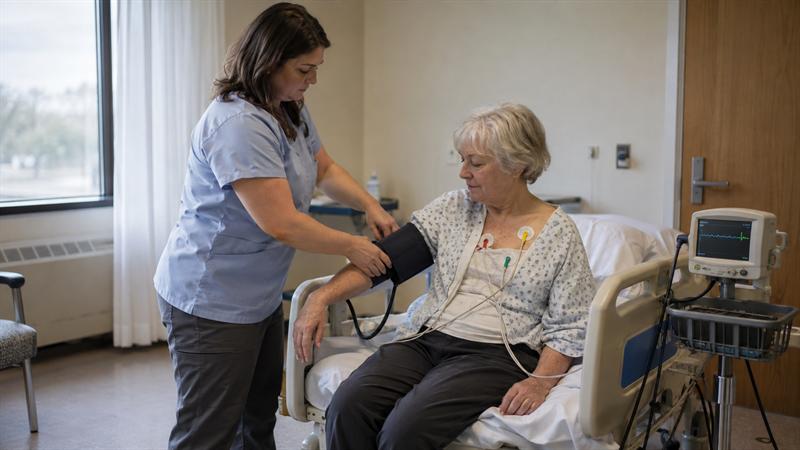
Any honest CNA role overview comes back to a small set of tasks repeated with care. Vital signs come first in many facilities: temperature, pulse, respiration, blood pressure, and sometimes weight or blood sugar readings, recorded and passed along. Personal care fills much of the rest of the shift, from bathing and dressing to grooming, oral care, and toileting. Meals take time too, because some residents eat independently while others need setup, encouragement, or direct help. Mobility is the fourth pillar, since repositioning, transferring, and walking support protect skin, circulation, and confidence.
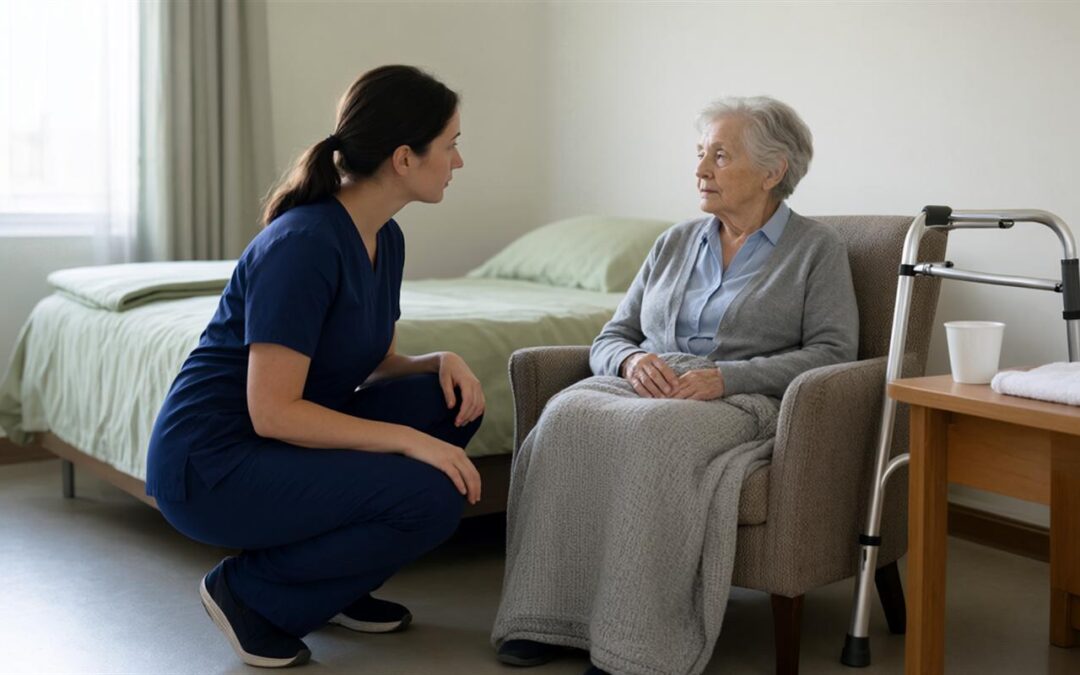
Running through all of it is observation. A CNA is in the room more than anyone else on the team, which is why the role carries so much reporting responsibility. A new complaint, a change in appetite, a reddened area, a shift in mood, a resident who suddenly cannot grip a cup: these are the details a nurse needs and cannot see from the hallway.
The five duties below form the spine of the work, though the order changes with the setting and the resident.
- Measuring and recording vital signs, then passing anything outside the expected range to the nurse.
- Assisting with bathing, dressing, grooming, oral care, and toileting while protecting privacy and dignity.
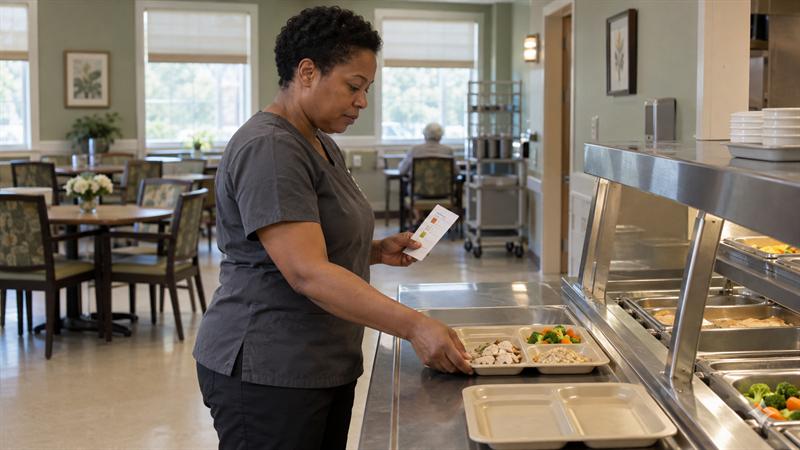
- Supporting meals and fluid intake, including setup, positioning, and reporting a drop in appetite or intake.
- Helping residents move, reposition, and transfer using the equipment and technique the facility requires.
- Charting completed care and reporting observations so the next shift starts with accurate information.
Documentation deserves its own mention. Charting is not paperwork added on at the end of the shift; it is how care continues when you are not there. A note that says what was done, when, and what changed is the difference between a smooth handoff and a nurse walking into a situation blind.
What a CNA Does Not Do
The boundary is worth stating plainly, because new students often assume the role is broader than it is. A CNA does not assess a patient, make a diagnosis, or write the care plan. Those steps require a licensed nurse. Medication administration sits outside the standard CNA scope as well. In assisted living and similar settings, it is typically handled by licensed nurses or by certified medication aides working under nurse delegation, with the exact arrangement set by the facility and state rules.
That limit protects everyone. A CNA who understands the scope does not take shortcuts on a task that needs a nurse’s sign-off, and does not guess at a medication question a family member raises at the bedside. The answer in both cases is the same: report it and let the nurse decide. For CNAs who want to take on medication handling later, the next credential is a separate program with its own coursework and exam, and what certified medication aide training adds is worth reading before committing to that step.
Where CNAs Work Across Georgia
The job title stays the same across settings, but the day does not. Nursing homes and long-term care facilities are the most familiar CNA setting, and the work there is relationship-heavy: the same residents, the same routines, and a team that knows the hall well. Assisted living communities lean toward support with daily living and a lighter clinical load, with more resident independence. Hospitals put CNAs on med-surg floors, rehab units, and observation areas where turnover is faster, handoffs are frequent, and a shift can change direction in an hour.
Rehabilitation facilities sit between those models, with short stays and a therapy-heavy schedule. Home health and hospice agencies send CNAs into private homes, which adds travel, family contact, and a level of autonomy that some people thrive on and others find isolating. Staffing agencies offer variety and flexibility, with the tradeoff of rotating assignments and less familiarity with a given building. The CNA duties Georgia employers list will look similar on paper across these settings; the pace, supervision, and emotional load are what actually differ.
It helps to be honest about which of those environments suits you before you take a first job, because the mismatch is usually about setting rather than skill.
The Realities: Pace, Physical Demands, and Teamwork
The work is physical. Shifts involve standing, walking, bending, lifting, and repositioning people, often with equipment and sometimes without enough of it. Many facilities run around the clock, which means evenings, nights, weekends, and holidays appear on the schedule. Some days are calm and predictable; others bring an admission at shift change and two call lights that will not stop.
What separates a steady CNA from a rushed one is rarely speed. It is the habit of looking before moving, asking before assuming, and writing down what was observed while it is still fresh. Clear communication carries the role, because a CNA hands off to a nurse, to the next shift, and to families who want to know how the day went. The people who last in this work tend to be organized, calm under interruption, and comfortable saying what they need.
What CNA Training in Georgia Covers
DuMonde Training Center in Roswell runs a three-week CNA program built on the CNATP standards, combining classroom instruction with hands-on practice in a lab setting. Students practice taking vital signs, collecting lab specimens, assisting with activities of daily living, and supporting nutrition. Instruction also covers safety and emergency procedures, restorative care, managing patient information, observing and charting documentation, and procedures around death and dying. Patient rights run through the whole curriculum, along with the idea that residents should take part in their own care wherever they can.
Completion makes a student eligible to sit for the NNAAP exam, the final step before a certificate is issued. Evening and weekend sessions are available, and those options extend the timeline beyond three weeks. DuMonde Training Center has graduated more than 200 students from the Roswell program in the past two years, and its instructors bring more than 50 years of combined experience training and supervising caregivers. CNA classes in Roswell list current schedules for anyone comparing start dates.
Before paying a deposit anywhere, it is worth checking how a program handles hours, clinical practice, exam fees, and scheduling. A practical checklist for comparing CNA programs walks through the questions that separate a clear commitment from a vague one.
Is the CNA Role the Right First Step?
For many people entering healthcare, the CNA credential is the widest doorway. It teaches bedside care, it is short enough to finish without stepping away from work, especially with evening and weekend options, and it opens work in almost every care setting. It is also the ground the other clinical roles build on, and many people come to medication aide or patient care technician work after time as a CNA.
The alternatives are narrower by design. Certified medication aide training adds medication handling to an existing care skill set, and phlebotomy focuses on blood collection and specimen handling rather than daily care. Neither replaces the CNA foundation, and both tend to suit people who already know which part of the work they want more of. If you are weighing the options, compare CNA, CMA, and phlebotomy side by side and look at the daily tasks rather than the program length.
Key Takeaways
The role is easier to evaluate once the scope, the boundary, and the training path are clear.
- A CNA carries out assigned care under a nurse’s direction, without assessing, diagnosing, or building care plans.
- The daily work mixes vital signs, personal care, nutrition support, mobility help, charting, and close observation.
- Settings range from nursing homes and hospitals to assisted living, rehabilitation, home health, hospice, and staffing pools, each with a different pace.
- Georgia training follows CNATP standards, and certification runs through the NNAAP exam and the State Nurse Aide Registry.
Where to Go From Here
If the scope described here sounds like work you would do well, the next step is a schedule and a start date rather than more reading. Ask what the next class covers, how the lab hours run, and what the exam step involves. Call (404) 444-4554 to ask about upcoming CNA class dates at the Roswell training center, or use the registration page to hold a seat.