Six entry-level roles come up again and again when people start comparing allied health careers in Georgia: certified nurse aide, certified medication aide, patient care technician, phlebotomist, pharmacy technician, and dietary aide. The titles sit close together on a course list. The work does not. One role spends the shift at the bedside, another at a medication cart, another on a tray line. This guide compares the six by what the work involves, how long training runs, and which criteria tend to settle the choice.
What Allied Health Careers in Georgia Have in Common
All six are support roles. Each carries structured training, a defined task list, and supervision from licensed staff, and none of them replaces a nurse, a pharmacist, or a physician. The scope attached to each title is set by the employer, which is why two job postings with the same name can describe different days.
They also share a practical entry point. Training is measured in days or weeks rather than years, and the first credential is often the one that opens the door to the next. That is the useful way to read the comparison: not as six careers competing for the same student, but as six different starting points on one map.
How the Six Roles Compare at a Glance
Most people searching for a “CNA CMA PCT phlebotomy comparison” are trying to work out which title matches the work they picture themselves doing. Here is the short version of all six roles on the DuMonde Training Center course list:
- A certified nurse aide (CNA) works at the bedside: help with bathing, dressing, and eating, vital signs, observation, and charting.
- A certified medication aide (CMA) passes certain medications in assisted living under nurse delegation. It is a certification, not a nursing license.
- A patient care technician (PCT) carries a wider bedside load, and the task list shifts with the employer. Hospitals, clinics, and dialysis centers all hire for the role.
- A phlebotomist collects blood specimens, with work in hospitals, clinics, labs, and mobile collection settings.
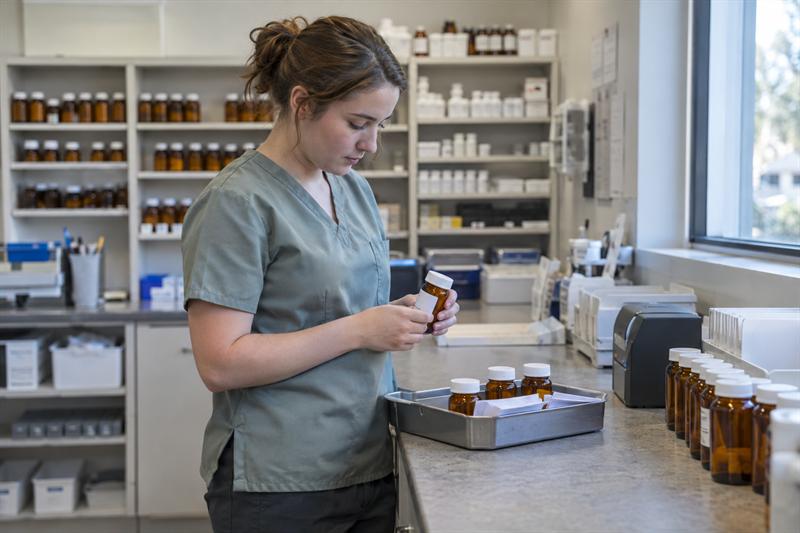
- A pharmacy technician handles prescription intake, counting and labeling, inventory, and insurance paperwork under a licensed pharmacist, in retail or hospital pharmacies.
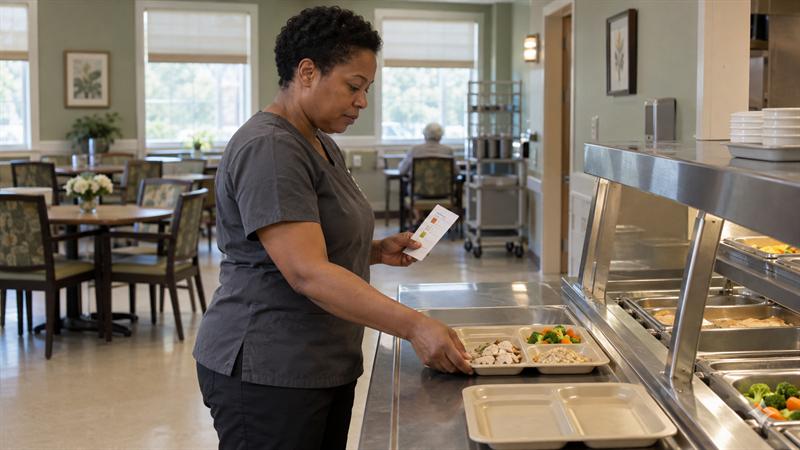
- A dietary aide works the food side of care: diet orders, tray accuracy, and food safety in nursing homes, assisted living, and hospitals.
Direct Care Roles: CNA, CMA, and Patient Care Technician
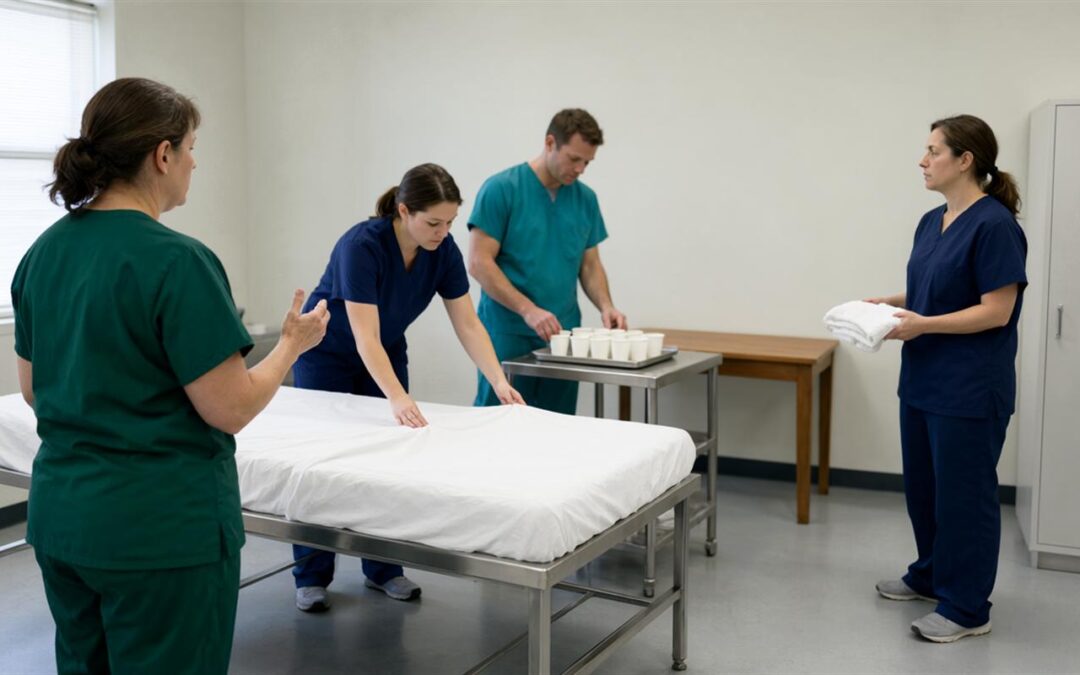
A CNA shift is built around a small group of people. The work covers activities of daily living, vital signs, watching for changes, and writing down what changed. Long-term care is a common setting, and hospital floors and home care agencies hire for the role as well.
A certified medication aide carries a narrower and more accountable task: passing medications in assisted living, with a nurse delegating which ones and under what rules. Training covers drug classifications, administration methods, medication safety, and documentation. The credential does not extend to nursing practice, and the role works inside rules a nurse sets.
A patient care technician sits between those two pictures. The job is broader bedside support, and the exact mix of tasks is decided by the employer rather than by the title. Some PCTs work in hospitals, some in clinics, some in dialysis centers, and each setting shapes the day.
The overlap between these three and blood collection is where a lot of the confusion starts, so how the CNA, CMA, and phlebotomy roles differ is worth reading next.
Technical and Support Roles: Phlebotomy, Pharmacy Technician, and Dietary Aide
Phlebotomy is a procedure-driven role. The work is blood collection, and the skill sits in technique, patient communication, and handling specimens correctly. Hospitals, clinics, labs, and mobile services all use phlebotomists, and clinic schedules often start early because collection rounds come first.
A pharmacy technician works with process and detail. Prescription intake, counting and labeling, inventory, and insurance or billing paperwork all pass through the role, under the supervision of a licensed pharmacist. Retail and hospital pharmacies run on different rhythms, but both reward accuracy and patience with repetition.
A dietary aide works in food service inside a care setting. Diet orders, tray accuracy, and food safety are the core of the job, and the day is structured around meal service. It is one of the few entry points into healthcare that does not begin at the bedside.
If blood collection is the part that appeals and you are also weighing a wider clinical support role, phlebotomy versus medical assisting compares the two paths directly.
Training Length and the Pace Each Role Sets
The CNA program at DuMonde Training Center runs three weeks and follows Georgia’s Certified Nurse Aide Training Program standards, with classroom instruction and hands-on lab practice. Evening and weekend sessions are available, and those extend the timeline.
The certified medication aide program runs two to five days. Phlebotomy training totals 80 hours: 48 classroom and laboratory hours, then 32 onsite clinical hours completed within three weeks after the classroom portion, for four weeks in all. CPR and first aid training runs one day.
A short program is not a shortcut into a role that needs a longer one. The hours track the scope: a medication aide learns a narrow, high-accountability task, while a phlebotomy student spends 80 hours on technique, safety, and supervised draws before working independently.
Daily pace differs as much as training length. A CNA shift moves with the people in the room. A medication aide’s day has fixed rounds inside a longer shift. A phlebotomist’s morning is built around collection rounds, a pharmacy technician works against a queue that refills all shift, and a dietary aide’s day is built around meal service.
How to Decide Which Healthcare Support Career to Start With
If you have typed “which healthcare support career should I start with” into a search box, the honest answer is that the choice usually comes down to four questions. How much hands-on contact do you want? How much precision procedure? How much paperwork and process? What schedule can you protect, both for training and for the shift itself?
Heavy direct contact points toward CNA, CMA, or PCT work. Precision with a defined procedure points toward phlebotomy. Process, detail, and a steady queue point toward pharmacy technician. Food service and operations point toward dietary aide. None of those answers is better than another. They describe different working days.
If the choice has narrowed to bedside care, the CNA and patient care technician comparison works through the difference in scope and training.
Where Each Path Can Lead
For a CNA, the first step after program completion is eligibility to test for the National Nurse Aide Assessment Program exam. Passing candidates are entered in the State Nurse Aide Registry and receive a CNA certificate. From there, some add medication aide or phlebotomy training rather than changing fields, because the new skill builds on work already done at the bedside.
Pharmacy technicians and patient care technicians tend to grow inside their settings. Hospitals that cross-train support staff often give PCTs a wider range over time, and hospital pharmacy departments can offer a different scale of work than retail. The path depends on the employer and on how much responsibility the technician wants to take on.
Dietary aide work can serve as a first step into healthcare operations, with movement toward other support roles or food service responsibilities later. Each of these routes is conditional. None of them is automatic, and the pace of progression varies by facility.
Starting Training in Georgia
Before paying a deposit, compare the total hours, where clinical practice happens, how the schedule fits around work, and which credential the program prepares you to test for. Ask what graduates of that program tend to do in their first month on the job, because the answer says more about fit than a course description does.
DuMonde Training Center trains students in Roswell and serves the Atlanta metro. Its course list covers all six roles, and each role has a guide on the school blog that goes deeper than a comparison page can.
Key Takeaways
- The six roles differ less by title than by how much of the shift is spent in direct contact with people.
- Training length tracks scope, so compare total hours rather than the number of calendar weeks.
- A CNA credential opens the state registry, and medication aide or phlebotomy training can be added later without starting over.
- Patient care technician duties are set by the employer, so ask for the task list before enrolling.
- The right starting point is the one whose daily work you can picture doing on an ordinary day, not only an interesting one.
Conclusion
Start with the two roles you would actually accept a job in, read the guide for each on the school blog, and ask about upcoming schedules. DuMonde Training Center offers CNA, certified medication aide, and phlebotomy programs in Roswell, and lists pharmacy technician, patient care technician, and dietary aide training among its courses. A short conversation about total hours and start dates will settle more than another week of comparing job titles.