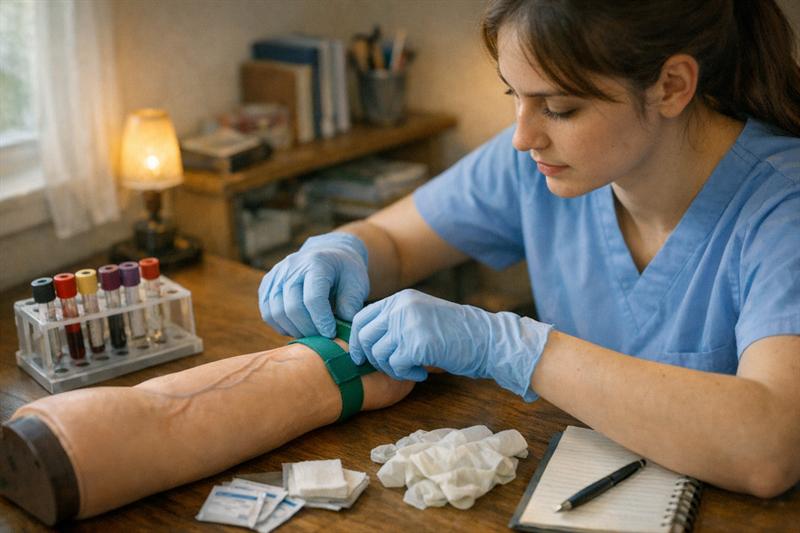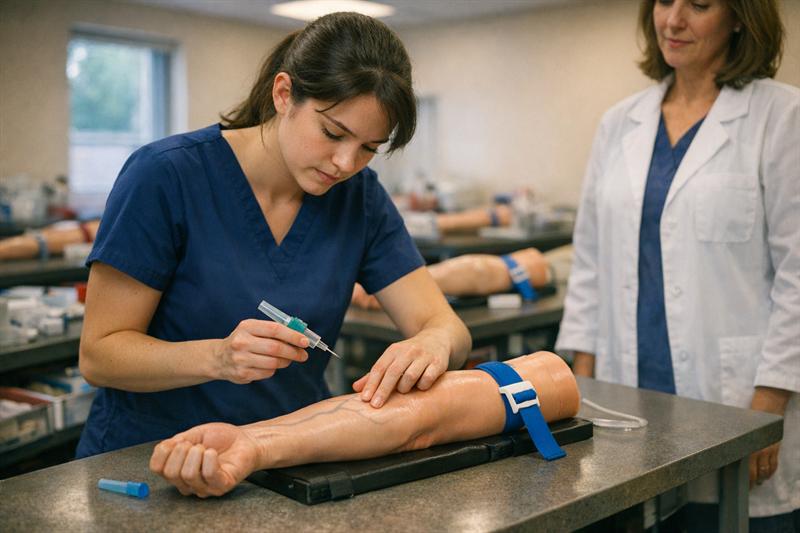
Quick Answer: Yes, you can pass phlebotomy training if you’re afraid of needles, but the fear usually does not fade on its own. It tends to improve through repeated practice, instructor support, and a training program that introduces hands-on skills gradually.
Why Fear of Needles Is More Common Than You Think
Fear of needles is more common than many people expect, especially among students exploring healthcare careers. It can feel physical, mental, or both, and it often peaks before any real training begins.
Many students start out motivated, then hesitate when they realize they will eventually need to perform blood draws. That hesitation by itself is not the problem. The bigger issue is when hesitation turns into avoidance and keeps someone from practicing.
- Increased heart rate or lightheadedness
- Avoiding situations involving needles
- Anxiety leading up to practice sessions
- Freezing or overthinking during early attempts
Building strong coping habits early can help. Many of the same habits connect to the communication, composure, and professionalism covered in soft skills that make a great phlebotomist.
What Needle Fear Actually Feels Like
For many people, the hardest part is not the procedure itself but the anticipation beforehand. Stress builds before the task starts, then eases once it is over.
- Tension leading up to practice
- Relief after completing a draw
- Less anxiety after repeated exposure
This is where some students misread the situation. The fear can feel like a permanent limitation, but in many cases it reflects unfamiliarity more than inability.
Why People Interested in Healthcare Still Struggle With It
Interest in healthcare does not automatically remove discomfort with needles. Many people are drawn to patient care but still hesitate around specific technical skills.
A common misconception is that healthcare professionals begin their training already comfortable with every task. More often, comfort is built during training, not before it.
What Phlebotomy Training Is Really Like (Step-by-Step)
Phlebotomy training is typically designed to build skill in stages. Students are introduced to concepts first, then gradually move into hands-on work. That structure can make fear more manageable instead of overwhelming.
If you want a clearer picture of how training unfolds, this guide on how long phlebotomy training takes breaks it down step by step.
Early Training: Learning Before Needles
The first phase usually focuses on understanding what you are doing and why. This includes anatomy, safety procedures, and equipment handling.
This stage matters. When students underestimate the basics, anxiety often carries into later hands-on work.
First Needle Practice: What Actually Happens
Initial practice should happen in a controlled setting with direct supervision. Instructors guide each step so students are not left to figure it out on their own.
For many students, this is the turning point. What felt intimidating starts to feel more like a clear, repeatable process once it is broken down and practiced correctly.
Repetition and Confidence Building
Confidence usually follows repetition. It does not have to come first.
Students who keep practicing often begin to settle into the process. Students who delay or avoid practice usually stay at the same level of discomfort. This is where progress either builds or stalls.
Can You Succeed in Phlebotomy If You’re Afraid of Needles?
Yes, many students with an initial fear of needles go on to complete training. The deciding factor is usually not the fear itself, but whether the student stays engaged with the learning process.
A common pattern is hesitation at the start, followed by a noticeable shift after a few successful attempts. As the process becomes more familiar, the fear often loses some of its intensity.
Patterns Seen in Successful Students
- They continue practicing even when it feels uncomfortable
- They accept feedback and adjust quickly
- They focus on learning the process instead of trying to avoid every mistake
This approach supports steady improvement. Avoidance usually slows it down.
When Fear Becomes a Real Barrier
Fear becomes a real barrier when it consistently prevents participation. If required practice is repeatedly avoided or left incomplete, training cannot move forward as planned.
That can lead to delays or make it difficult to finish the program. That is why early participation matters.
Practical Ways Students Manage Needle Fear During Training
Students do not need to eliminate fear before starting. Many learn to manage it through gradual exposure, structure, and repetition.
- Starting with observation before moving into hands-on practice
- Practicing in a controlled, lower-pressure environment
- Using steady breathing during procedures
- Repeating the same steps until they feel more routine
- Working closely with instructor guidance
Without that kind of structure, fear may stay the same. With it, many students become more comfortable over time.
What to Look for in a Training Program If You’re Nervous
The structure of the program matters more than many people realize. The wrong environment can make anxiety worse. The right one can make it easier to build skill and confidence.
This phlebotomy program checklist outlines what to look for when comparing options.
Structured Skill Progression
Training should move in clear steps. When students are pushed into procedures too quickly, anxiety can rise and confidence can drop.
Instructor Support and Supervision
Early guidance is important. Students need feedback in real time, especially during first attempts. Without it, mistakes can repeat and uncertainty can build.
Hands-On Practice Without Excess Pressure
Practice should be consistent and supported. Rushed environments often increase hesitation rather than reduce it.
If This Sounds Like You, Don’t Wait
If you are interested in phlebotomy but holding back because of needles, this is often where people lose momentum.
- You keep researching but have not taken the next step
- You feel interested but hesitant at the same time
- You are unsure whether you will be able to handle the hands-on portion
- You are waiting to feel “ready” before starting
Waiting usually does not reduce the fear. Practice in a structured setting is what helps most. If you recognize these patterns, the next step is to look for a training environment that addresses them directly.
When Phlebotomy Might Not Be the Right Fit
In some cases, a reaction to needles can be strong enough to interfere with training. If repeated attempts are not improving, it may be worth considering a different path.
Healthcare still offers multiple entry points. Roles like CNA or patient care technician involve different responsibilities and may involve less direct needle work. This comparison of phlebotomy vs medical assistant can help you compare options.
How Dumonde Training Center Supports Beginners
Dumonde Training Center approaches phlebotomy training with clear progression. Students begin with foundational knowledge, then move into supervised, hands-on practice in a way intended to build confidence over time.
That matters because fear tends to stay high when students feel unprepared. With structure, guidance, and consistent practice, many students become more comfortable as they gain experience.
Conclusion
Fear of needles does not automatically prevent success in phlebotomy. Avoiding the process is what usually gets in the way. When hesitation turns into delay, progress stalls and confidence has less chance to build.
Students who step into structured training often improve through repetition and support. Students who wait for the fear to disappear before starting usually do not move forward.
Dumonde Training Center is built around that progression. If you are serious about starting a healthcare career but feel held back by this, the next step is to find a program that guides you through it with structure and support.
Key Takeaways
- Fear of needles is common, even among healthcare students
- Confidence develops through repetition, not before starting
- Structured training can play a major role in reducing anxiety
- Avoidance is what most often slows or stops progress
- The training environment can directly affect the learning experience
Frequently Asked Questions
Can you pass phlebotomy training with a fear of needles?
Yes. Many students start with hesitation and complete training successfully. Structured practice and repetition can reduce anxiety over time, especially with instructor support. Reviewing how a program is structured can help you decide whether it fits your needs.
How do phlebotomy students get used to needles?
They usually get used to them through repetition and guided exposure. Training often starts with observation and builds into supervised practice. As the process becomes familiar, discomfort often decreases.
Is needle fear a dealbreaker for healthcare careers?
No, but it depends on how strong the reaction is. Mild to moderate fear often improves during training. Strong reactions that prevent participation may make certain roles more difficult to pursue.
What happens if you can’t complete blood draws during training?
You may not meet the requirements to complete the program. Hands-on competency is typically part of phlebotomy training, so avoiding practice can prevent progress. Understanding that early helps you make a more informed decision.
Are there healthcare careers without needles?
Yes. Some roles involve limited or no needle use. Positions like CNA or patient care technician focus on different responsibilities, which may make them a better fit if you want to work in healthcare but prefer to avoid frequent needle-related tasks.