Quick Answer: A phlebotomy practice kit should include simulation tools such as a vein trainer, tourniquet, and basic supplies so you can build technique safely without practicing on real people. The key is using the kit in a structured way, because unstructured practice can reinforce habits that are harder to correct later in supervised training.
Why Students Practice Phlebotomy at Home
Many students look for a phlebotomy practice kit because they leave class understanding the steps but still not feeling confident performing them. That is common in hands-on healthcare training. Knowing the process is different from doing it smoothly and consistently.
Phlebotomy is a skill that improves through repetition. Without enough practice, hesitation can show up during key moments such as positioning, setup, or sequencing. Small inconsistencies in those areas can affect the entire draw.
At-home practice can help close that gap when it is structured. When it is not, it can reinforce inconsistency instead of improving it.
If you are already working on consistency, these phlebotomy practice drills you can do daily can help reinforce proper technique between training sessions.
The Limits of Classroom Training
Classroom labs are designed to introduce skills, not perfect them. Time is limited, equipment is shared, and repetition is guided. Most students get enough exposure to understand the process, but not enough to feel fully steady performing it.
This is where gaps begin. Without enough repetition, steps like positioning and sequencing can stay inconsistent instead of becoming automatic.
Building Confidence Through Repetition
Confidence develops through consistent repetition of the same steps. Muscle memory improves when technique is practiced the same way each time.
A common mistake is focusing too much on the needle alone. In practice, many errors start earlier with tourniquet placement, vein identification, and preparation. When those steps are inconsistent, the entire procedure feels harder.
What Is a Phlebotomy Practice Kit?
A phlebotomy practice kit is a set of tools used to simulate blood draw procedures so students can practice safely without working on real patients.
A well-designed kit supports the full process, not just one step. It helps build familiarity with how the procedure should flow from start to finish.
Simulation vs Real-World Practice
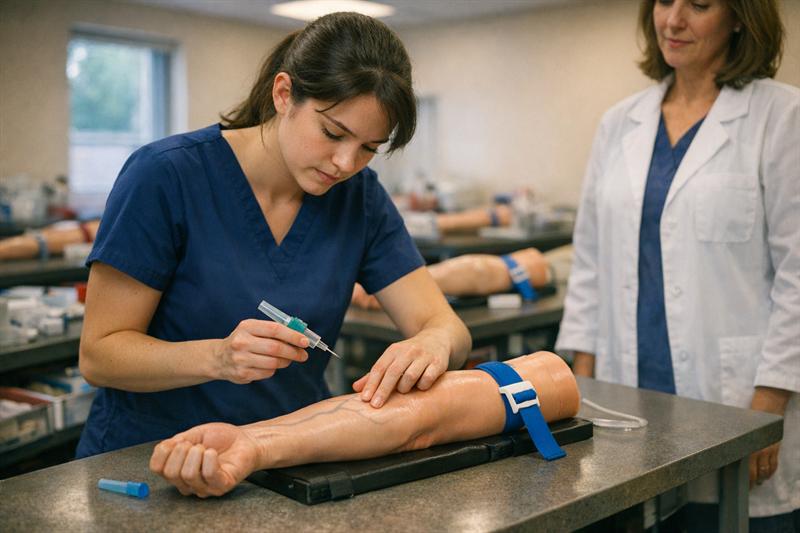
Simulation tools such as vein trainers allow repeated practice in a controlled setting. They are useful for learning positioning, angles, and sequencing without the risks that come with practicing on a real person.
Real-world practice involves patient interaction, varying vein conditions, and real-time adjustments. Trying to recreate that at home without supervision can lead to inconsistent technique.
What a Kit Should and Should Not Include
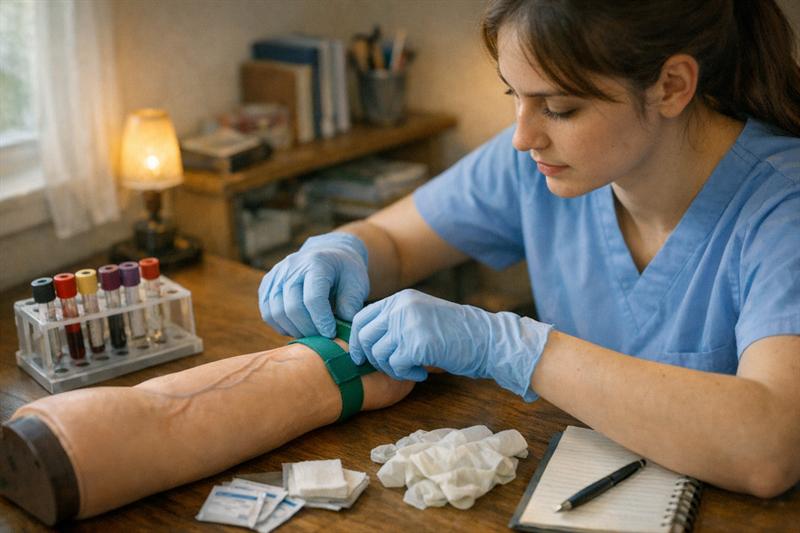
- Should include: a simulation arm or vein trainer, tourniquet, collection tubes, holders, gloves, and prep supplies
- Should not include: attempts to perform live blood draws outside supervised training settings
- Should focus on building correct habits through repetition
- Should reinforce proper setup and sequencing
Essential Items in a Phlebotomy Practice Kit
A practice kit is most effective when each item supports a specific part of the procedure. The goal is not just familiarity with the tools, but consistency in how they are used together.
Simulation Arm or Vein Trainer
This is the core of safe practice. It allows repeated work on positioning, angle, and control without involving a real patient.
Without a simulation tool, practice can turn into guesswork. That often leads to technique that needs more correction later.
Tourniquets and Practice Bands
Tourniquet use affects everything that follows. Placement that is too tight, too loose, or poorly positioned changes how veins present.
When this step is inconsistent, vein access becomes more difficult than it needs to be.
Needles and Safety Considerations
Understanding needle handling is part of training, but using needles without supervision adds unnecessary risk. Many students feel ready to try full procedures too early, which can slow progress rather than help it.
At-home practice should focus on positioning, handling awareness, and sequence, not performing live draws.
Collection Tubes and Holders
These tools help build familiarity with sequencing and handling. Mistakes here can lead to confusion during collection and weaken the flow of the procedure.
This step is often rushed by beginners. When sequencing is inconsistent, the entire process becomes less controlled.
Gloves, Alcohol Prep, and Basic Supplies
Infection control is part of the procedure from the beginning. Practicing with the proper supplies helps build consistent habits.
Skipping these steps during practice can create gaps that show up later in supervised settings.
What You Should NOT Practice at Home
Practicing on real people at home introduces unnecessary risk. Without supervision, mistakes are not corrected and can become habits.
- Practicing blood draws on friends or family
- Skipping infection control steps
- Improper disposal of sharps
- Attempting full procedures without training oversight
Risks of Practicing on Real People
This can lead to poor technique and unnecessary harm. Without feedback, errors are more likely to repeat than improve.
Infection Control Concerns
Improper handling and disposal can increase the risk of contamination. These are not areas to improvise or learn through trial and error at home.
Legal and Ethical Considerations
Phlebotomy is typically taught and performed within structured training and clinical environments. Practicing outside those settings can create avoidable safety and compliance issues.
If you are relying on at-home practice to feel ready, pay attention to these signs:
- You feel unsure about your setup before each attempt
- You are guessing at steps instead of following a sequence
- You have not practiced under supervision recently
- You feel comfortable with the tools but not with real scenarios
If this sounds familiar, practice alone may no longer be moving you forward. Structured training is usually the next step.
How to Practice Safely and Effectively
Practice should be structured and repeatable. The goal is to build consistency, not just familiarity.
One of the biggest problems with solo practice is repeating the same mistakes without realizing it. Without structure, practice can reinforce those patterns instead of correcting them.
Understanding what to expect in phlebotomy training helps connect at-home practice to real skill development.
Structured Micro-Drills Using Equipment
Break the procedure into smaller steps and practice them individually. Focus on areas such as tourniquet placement, positioning, and setup.
This approach builds control and reduces errors when you move through the full sequence.
Repetition Without Risk
Practice movements and positioning without performing live draws. This allows repetition while keeping practice safer and more controlled.
Tracking Progress
Pay attention to consistency. If the steps vary each time, the technique is not yet stable.
Improvement becomes clearer when you can repeat the same process without hesitation.
When a Practice Kit Isn’t Enough
A practice kit builds familiarity, but it does not replace real patient interaction. This is where many learners reach a plateau.
Simulation cannot fully replicate variation in veins, patient communication, or real-time adjustments.
The Importance of Supervised Clinical Training
Working with real patients introduces variables that require guidance. Instructor feedback helps identify and correct mistakes early.
How Formal Training Reinforces Skills
Structured programs provide repetition, correction, and confirmation that technique is being performed as taught. This is how skills become more consistent and dependable.
If you are evaluating your next step, this guide on how to choose the right phlebotomy program can help you make a more informed decision.
Key Takeaways
- A phlebotomy practice kit should focus on safe simulation, not real procedures
- Many early mistakes come from setup, not just needle use
- Unstructured practice can reinforce incorrect habits
- Simulation builds familiarity, but not full readiness on its own
- Supervised training is usually needed to perform consistently
Conclusion
The challenge is not access to tools. It is how those tools are used. Practicing without structure or feedback can lead to habits that slow progress instead of improving it.
This often shows up as hesitation, inconsistent technique, and difficulty adapting in real patient situations. Without correction, those patterns can carry into clinical training.
Dumonde Training Center focuses on structured, hands-on training that addresses these gaps directly. Students work through proper technique with supervision, guided repetition, and real feedback so skills develop on a stronger foundation from the start.
If practice at home is no longer improving your confidence, the next step is training in an environment where technique can be corrected and reinforced in real time. That is what helps move you from practice to readiness.
Frequently Asked Questions
What is included in a phlebotomy practice kit?
A phlebotomy practice kit typically includes a simulation arm, tourniquet, collection tubes, holders, gloves, and prep supplies. These tools reflect standard procedure setup and help build consistency. Using them correctly supports more effective practice.
Can you practice phlebotomy at home safely?
Yes, if you use simulation tools and avoid practicing on real people. Safe at-home practice should focus on setup, positioning, and technique. Supervised training is still important for real patient experience.
Do you need a simulation arm to learn phlebotomy?
It is not required, but it is one of the most effective ways to practice safely at home. It allows repetition of positioning and technique. It works best when combined with formal instruction.
Is it legal to practice blood draws on someone at home?
Practicing on others outside supervised training settings can create safety and compliance concerns. Phlebotomy is typically taught and performed in controlled environments. Training programs provide that structure.
How do you improve phlebotomy skills outside of class?
Use structured repetition with safe tools and focus on setup, positioning, and sequencing. This helps build consistency. Pairing that practice with supervised training usually leads to better progress.
What is the best way to prepare for phlebotomy certification?
Preparation usually involves consistent practice, a solid understanding of procedures, and supervised experience. Certification exams may evaluate knowledge and practical skills. Structured training helps bring those pieces together.