Quick Answer: Phlebotomy soft skills have a direct impact on whether a blood draw feels smooth and controlled or becomes more difficult than it needs to be. Many challenges are influenced not just by technique, but by how the patient is guided before, during, and after the procedure.
At Dumonde Training Center, this is a common part of the learning process. Many students focus on technique first, but the real test often shows up when a patient is anxious, unsure, or hesitant. That interaction can shape how the procedure unfolds.
Why Soft Skills Matter More Than Most Students Expect
Phlebotomy is technical, but patient response affects the outcome. When a patient feels uncertain or uncomfortable, they are more likely to tense up or move, which can make the draw harder to complete smoothly.
One common issue is rushed communication. If the patient does not fully understand what is happening, anxiety can rise and the draw may become more difficult. That can lead to repeat attempts and added stress for both the patient and the phlebotomist.
- Patients flinch or pull away during the draw
- Steps like labeling or verification feel rushed
- Repeat draws slow down the workflow
- Patient trust drops, making future interactions harder
For a better sense of how this plays out in real settings, see what working as a phlebotomist looks like each day. The process is structured, but patient interaction often affects how smoothly it runs.
The Core Soft Skills Every Phlebotomist Needs
Featured Snippet Answer: The most important phlebotomy soft skills include communication, empathy, attention to detail, professionalism, and adaptability. Each one supports patient cooperation and helps reduce avoidable mistakes.
Communication
Clear, simple explanations help patients stay informed and steady. When instructions are unclear, patients may hesitate or move at the wrong time, which can interrupt the draw.
Empathy
Many patients are uneasy around needles. If that concern is brushed aside, tension often increases. A calm, respectful approach helps patients settle and follow instructions.
Attention to Detail
This affects more than needle technique. Missing verification steps or labeling incorrectly can lead to rejected samples and repeated procedures.
Professionalism
Patients quickly decide whether they feel comfortable with the person performing the draw. Tone, posture, and confidence all influence that impression. When trust is low, cooperation is often harder to maintain.
Adaptability
Every patient responds differently. A one-size-fits-all approach can create friction. Adjusting how you speak and move helps keep the process calm and controlled.
A Simple Way to Apply Phlebotomy Soft Skills
Featured Snippet Answer: Phlebotomy soft skills are applied before the draw, during the draw, and after the draw. Each stage helps support patient cooperation and a more consistent process.
Before the Draw
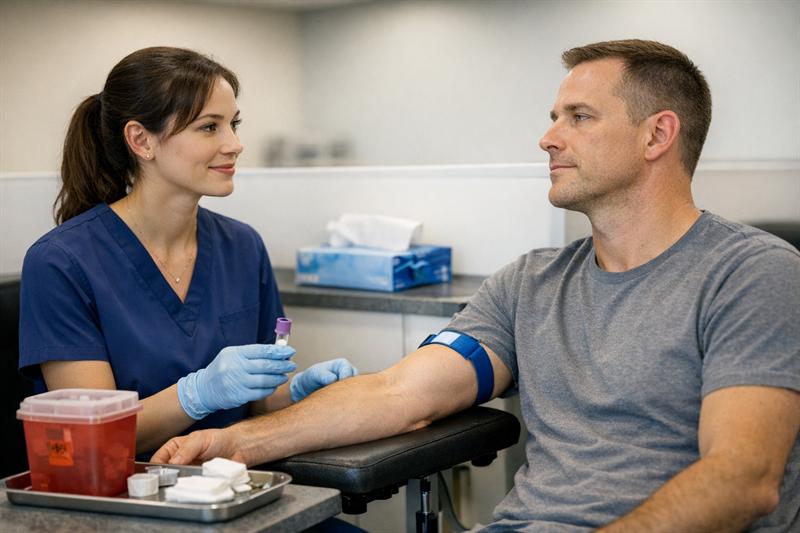
This is where the interaction is set. A clear introduction and brief explanation reduce uncertainty. Patients who understand what is happening are usually easier to guide through the process.
During the Draw
Consistency matters here. Calm, direct instructions help the patient stay still. When communication drops off, movement is more likely and the procedure can feel less controlled.
After the Draw
This step is often overlooked. Patients still need clear direction on what to do next. Skipping this can leave them unsure and end the interaction on a weaker note.
If you are early in your training, it helps to understand how these habits are developed. This guide on how long phlebotomy training takes explains when students typically begin practicing them.
Real-World Scenarios Phlebotomists Face
Nervous or Needle-Phobic Patients
This comes up regularly. If anxiety is not addressed early, it can build quickly. The patient may become tense, veins may be harder to access, and the chance of an unsuccessful attempt can increase.
After a difficult first attempt, the interaction often becomes more challenging. Anxiety rises, and each additional attempt calls for more control and clearer communication.
Pediatric and Elderly Patients
These patients often benefit from a slower, more deliberate approach. Rushing can lead to confusion or resistance. Adjusting pace and tone usually improves cooperation.
High-Volume Clinical Settings
Speed matters, but cutting communication short can create more problems than it solves. Moving too quickly often leads to mistakes, repeat work, and a less steady experience for the patient.
How to Build Phlebotomy Soft Skills Fast
Featured Snippet Answer: The fastest way to build phlebotomy soft skills is through repeated practice, observation, and direct feedback during hands-on training.
- Practice patient interactions in structured scenarios
- Watch how experienced professionals communicate
- Use simple, repeatable phrases until they feel natural
- Ask for feedback after each attempt
- Review what worked and what needs adjustment
Students who work on communication early often become more consistent during procedures.
If you are noticing these issues, your soft skills likely need more attention:
- You feel comfortable with technique but struggle with patient interaction
- Patients appear tense or hesitant during draws
- Explanations feel rushed or unclear
- You repeat attempts even when your technique seems solid
At that point, improving how you communicate and manage the interaction becomes an important part of progressing.
How Training Programs Reinforce Soft Skills
Soft skills are built alongside technical skills because both affect the same procedure. A structured program teaches students how to perform the draw and how to guide the patient through it at the same time.
This is where guided training can make a difference. Instead of relying only on trial and error, students practice realistic scenarios with feedback. That helps shorten the learning curve and reduce repeated mistakes.
Dumonde Training Center integrates this approach into its phlebotomy technician training. Students work on patient interaction as part of the process, not as a separate skill.
Choosing the right program also matters. This guide on how to choose the right phlebotomy program in Georgia outlines what to look for when comparing options.
Key Takeaways
- Soft skills influence how smoothly a blood draw is performed
- Clear communication helps improve patient cooperation
- A consistent interaction style can reduce avoidable mistakes
- Many students find patient interaction more challenging than technique at first
- Structured training helps develop both skill sets together
Conclusion
Phlebotomy is not just about drawing blood. It also involves guiding the patient through the process in a calm and professional way. When soft skills are underdeveloped, procedures can become less predictable and harder to manage well.
Without focused practice, the same communication issues can keep showing up and slow progress over time.
Dumonde Training Center builds both technical skill and patient interaction from the start. That combination helps prepare students for real clinical situations, not just controlled practice.
If you want to improve consistency and build confidence in both areas, the next step is to train in an environment that teaches the full process together.
Frequently Asked Questions
What soft skills are most important for phlebotomists?
Communication, empathy, attention to detail, professionalism, and adaptability are among the most important. These skills influence how patients respond and how smoothly procedures are completed. Strong training helps develop them alongside technical ability.
Why are soft skills important in phlebotomy?
Soft skills help patients stay calm and follow instructions. When communication is unclear, movement and mistakes are more likely. Strong interaction skills support safer, more consistent procedures.
Can soft skills be learned or are they natural?
They can be learned through practice and feedback. Training environments use repetition and realistic scenarios to help students strengthen these skills. With consistent effort, improvement becomes easier to notice.
How do phlebotomists handle anxious patients?
They use clear explanations, a steady tone, and calm reassurance. Reducing uncertainty can help lower tension and improve cooperation. These techniques are commonly practiced during training.
Do phlebotomy training programs teach soft skills?
Yes, strong training programs teach soft skills alongside technical procedures. Students practice communication and patient interaction in structured settings so they are better prepared for real-world conditions.
What happens if a phlebotomist lacks soft skills?
Procedures may feel less consistent, patients may be harder to guide, and repeat attempts can become more likely. Developing these skills early helps improve both performance and confidence.