Quick Answer: Most early phlebotomy mistakes start before the first lab. They usually come from relying too heavily on memorization, under-preparing for hands-on work, and overlooking how patient communication affects performance. Those habits can lead to hesitation, inconsistent technique, and slower progress once lab training begins.
Why Most Phlebotomy Students Feel Unprepared Before Their First Lab
Reading about venipuncture can feel straightforward until the next step is performing it on another person. That is often when confidence drops. The issue is usually not a lack of effort. It is the gap between knowing the steps and carrying them out under pressure.
In training, many students understand the process but pause when it is time to act. That hesitation is often where early mistakes begin and where confidence starts to slip.
Understanding what to expect during phlebotomy training can help reduce that gap before it affects performance.
The Gap Between Learning and Doing
Memorization builds familiarity, but phlebotomy also depends on coordination, control, and timing. A common pattern is students knowing every step but struggling to perform them smoothly. Without early attention to technique, movements can become stiff and uncertain.
What Instructors Notice in New Students
- Hesitation before needle insertion
- Overthinking each step instead of moving through the process
- Rushing due to nerves, which can lead to missed details
These patterns often show up in the first lab and can affect both performance and confidence.
Mistake #1: Focusing Too Much on Memorization Instead of Technique
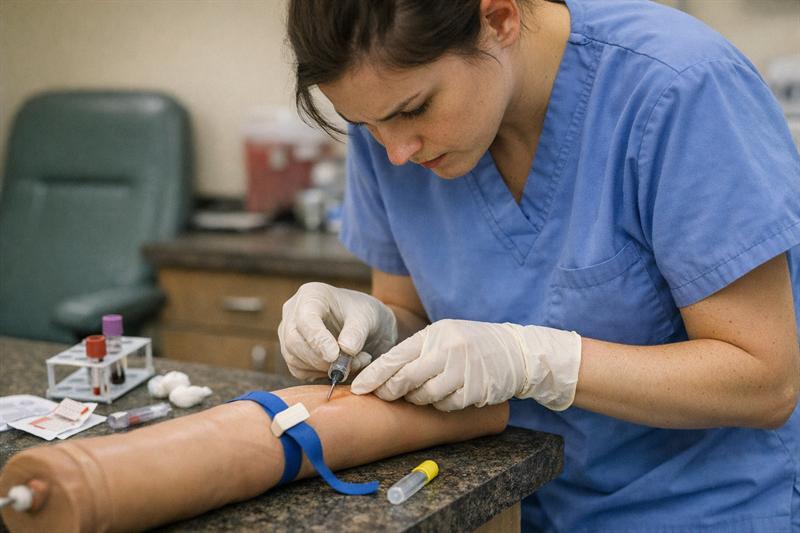
Knowing the steps is important, but it does not automatically translate into skill. Students who rely only on memorization often struggle with control during the procedure.
This can show up as shaky hands, poor needle angle, and difficulty locating veins. The adjustment is to give more attention to hand positioning, stability, and smooth movement before worrying about speed.
Mistake #2: Underestimating Infection Control Protocols
Infection control is not something to rush through. It needs to become routine. When it is treated like a checklist, small lapses are more likely to happen.
Missed steps or rushed sanitation are usually corrected quickly in lab settings, which can interrupt the flow and affect confidence. Over time, inconsistent habits make it harder to perform smoothly.
Reviewing expectations ahead of time, such as infection control tips for phlebotomists, can help reinforce consistency before hands-on practice begins.
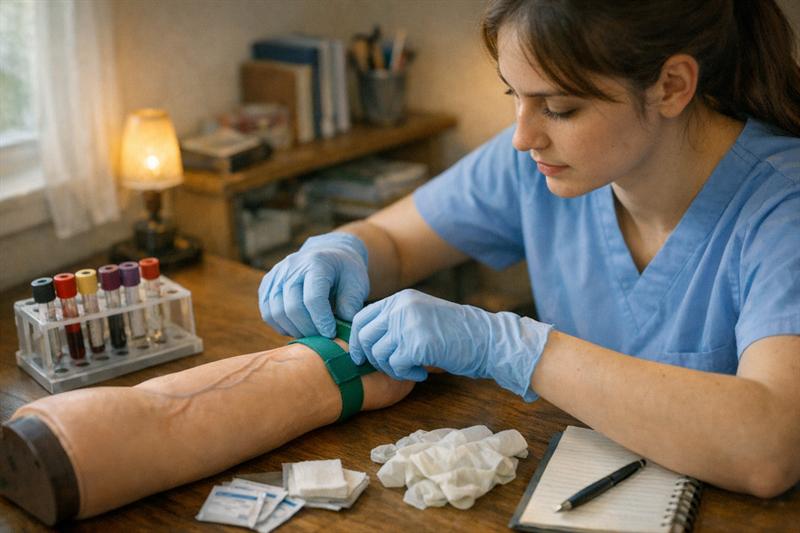
Mistake #3: Not Practicing Hand Positioning Early
Hand positioning has a direct effect on how smoothly the procedure goes. Without it, even well-understood steps can break down during execution.
A common mistake is waiting until lab to start developing this skill. That can lead to awkward positioning, missed veins, and repeated adjustments. Practicing early helps build the control needed to perform with more confidence.
Mistake #4: Avoiding Questions Out of Fear of Looking Inexperienced
Holding back questions can slow learning. When something is unclear and goes unaddressed, it often shows up later during practice.
This can lead to repeated mistakes that could have been corrected earlier. Students who ask questions tend to adjust faster because they are not guessing during key steps.
Mistake #5: Ignoring Patient Communication Skills
Phlebotomy involves both technical skill and patient interaction. Patients respond to how instructions are given and how confident the student appears.
This is often overlooked in early training. When communication is unclear, patients may become tense or unsure, which can make the procedure more difficult.
Clear, steady communication, as outlined in professional communication tips for phlebotomists, supports better cooperation and smoother procedures.
Mistake #6: Expecting to Get It Right on the First Try
Expecting immediate success can create pressure that interferes with performance. This often shows up as hesitation or overcorrection during the procedure.
Skill development in phlebotomy comes through repetition. Students who accept that process tend to improve more steadily because they stay focused on technique instead of trying to avoid every mistake.
Mistake #7: Poor Preparation Before Lab Day
Preparation directly affects how the first lab experience feels. When students arrive unsure, everything tends to slow down.
What to Review the Night Before
- Basic procedure steps
- Equipment names and uses
- Safety and infection control protocols
What to Bring Mentally and Physically
- Focus and patience
- Realistic expectations
- Required materials and proper attire
If any of the following sounds familiar before your first lab, your preparation may not be translating into readiness:
- You understand the steps but cannot picture performing them
- You are unsure about equipment or setup
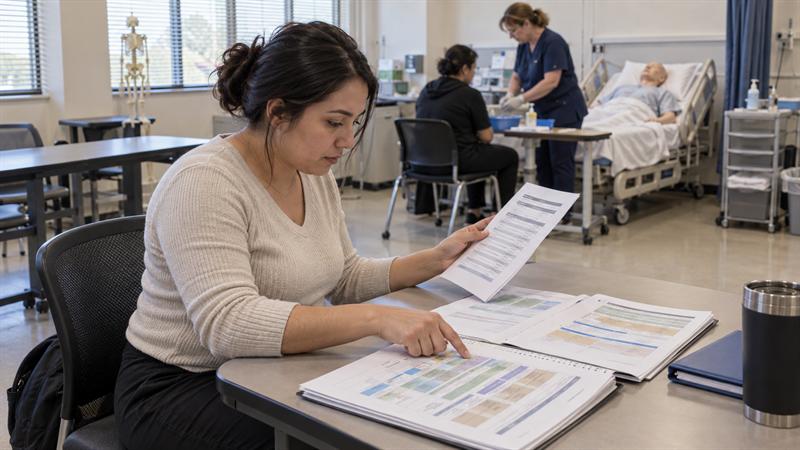
- You are relying only on notes without any practical review
- You feel anxious but cannot identify why
These are signs that more hands-on preparation may help before lab begins.
Mistake #8: Not Understanding Equipment Before Use
Unfamiliar equipment can slow everything down. Students who are unsure about their tools spend more time thinking about setup than focusing on technique.
This can disrupt the flow of the procedure and increase hesitation. Reviewing equipment ahead of time helps remove that barrier and keeps attention on execution.
Mistake #9: Comparing Progress to Other Students
Progress in phlebotomy training is not the same for everyone. Comparing performance can create unnecessary pressure and distract from learning.
That often leads to rushing or second-guessing, both of which reduce consistency. Staying focused on individual progress usually leads to steadier improvement over time.
Mistake #10: Treating Training Like a Checklist Instead of Skill Building
Completing steps is not the same as mastering them. When training is treated like a checklist, understanding often stays shallow.
This can become a problem later. Clinical settings require control, adaptability, and consistency. Without those, performance is more likely to break down under pressure.
How the Right Training Environment Reduces These Mistakes
The structure of a training program shapes how quickly mistakes are identified and corrected. Environments that emphasize repetition, feedback, and practical application help students build consistency faster.
When students receive immediate correction and guided practice, hesitation tends to decrease and technique becomes more consistent.
Choosing a program that prioritizes hands-on development, such as those outlined in how to choose the right healthcare training program, can make a meaningful difference in how prepared students feel entering clinical work.
Key Takeaways
- Most early mistakes come from limited hands-on preparation, not a lack of knowledge
- Confidence develops through repetition and guided practice
- Technique, communication, and preparation all affect performance
- The training environment influences how quickly skills improve
Conclusion
Many phlebotomy mistakes begin before the first lab when preparation stays limited to memorization. That gap can lead to hesitation, inconsistent technique, and slower progress once hands-on training starts.
If those patterns are not corrected early, they can carry into later training and make improvement harder than it needs to be.
Dumonde Training Center focuses on hands-on repetition, immediate feedback, and real-world application so students can build control early. That approach helps address the issues that commonly cause beginners to struggle.
If you are preparing for training or already feeling unsure, the next step is to choose an environment that builds skill through practice, not just instruction.
FAQ
What are common mistakes phlebotomy students make?
Many students rely too heavily on memorization and not enough on technique. This can show up as hesitation, poor hand control, and missed steps during procedures. Shifting focus to hands-on practice helps correct these issues early.
How can I prepare for my first phlebotomy lab?
Preparation includes reviewing the steps, understanding equipment, and mentally walking through the procedure. Students who do this often move more confidently during lab sessions and make fewer early mistakes.
Is it normal to be nervous during phlebotomy training?
Yes, nervousness is common, especially before performing procedures on another person. Many students experience hesitation early on, and that usually improves with repetition and guidance.
What skills are most important for beginner phlebotomists?
Hand positioning, infection control, and communication are all important. These affect procedure flow and patient cooperation, and they improve through consistent practice.
How long does it take to feel confident in phlebotomy?
Confidence builds over time with repeated practice and feedback. Many students begin to feel more comfortable after several supervised sessions as their technique becomes more consistent.
Do phlebotomy students practice on real people?
Many training programs include supervised practice on other people as part of skills development. This helps students build the control and confidence needed for clinical settings.